106 Clearview Rd, Madison Heights VA, 24572
Northminster Church © 2017
Find us on


Westminster Larger Catechism Q. 154. What are the external ways Christ uses to bring us the benefits of his mediation? A. The ordinary external ways Christ uses to bring the benefits of his mediation to his church are his regulations, particularly the word, sacraments, and prayer, all of which are made effective for the salvation of his chosen ones.a
a.. Mt 28.19-20, Acts 2.42,46-47, 1Tm 4.16, 1 Cor 1.21, Eph 5.19-20, 6.17-18.
We are a culture that is obsessed with the extraordinary. As Michael Horton writes in his book, Ordinary, “We’ve become accustomed to looking around restlessly for something new, the latest and greatest, that idea or product or person or experience that will solve our problems, give us some purpose, and change the world… Who wants a bumper sticker that announces to the neighborhood, ‘My child is an ordinary student at Bubbling Brook Elementary’?”1 We chase after “mountaintop” spiritual experiences, launch mission and evangelism efforts that will “take this city for Jesus,” believing that the only way to actually make a “real difference” (whatever that means) is to do something, well, extraordinary on behalf of Jesus and the Kingdom of God. I have been wondering lately if we haven’t gotten the extraordinary ends that God is able to achieve mixed up with the ordinary means by which He goes about doing so.
In Reformed theology, the phrase, “the ordinary means of grace” refers to the proclamation of the Word of God, the right exercise of the Sacraments, and the regular practice of prayer. These are the “ordinary,” as in primary but not only, means by which God brings His transforming grace and power into our lives in order to make us into the new creations He intends and desires us to become. As Thomas Vincent explains, “the ordinances are the most usual way and means of conversion and salvation, without the use of which we cannot, upon good ground, expect that any benefit of redemption should be communicated to us.”2 They are also “ordinary” in the sense that there is nothing particularly outlandish or unique about them. The scriptures have existed in their current state for almost 2,000 years. The sacraments make use of everyday items — water, bread, and wine (or juice). Prayer is something we are able to do at any time, in any place; while formal and ritualized prayers have their place and benefit, we can also kneel down beside our bed at night. There is very little that is revolutionary, radical, or groundbreaking about them. And while God certainly works in other ways all the time, His most powerful, effective, and long-lasting works are done primarily through these simple, ordinary means.
What if the same is true for us — as individual followers of Christ, and as a community of people striving to be faithful together? What if our extraordinary God is calling us to ordinary faithfulness, day in and day out, through our regular getting-up-and-going-to-work-or-school lives? Tish Harrison Warren writes,
…what I’m slowly realizing is that, for me, being in the house all day with a baby and a two-year-old is a lot more scary and a lot harder than being in a war-torn African village. What I need courage for is the ordinary, the daily every-dayness of life. Caring for a homeless kid is a lot more thrilling to me than listening well to the people in my home. Giving away clothes and seeking out edgy Christian communities requires less of me than being kind to my husband on an average Wednesday morning or calling my mother back when I don’t feel like it.3
For the past several years, Northminster has not been able to do much that might qualify as “extraordinary.” We see and hear of churches around us doing lots of great things, which is great, but we’re left wondering if God is able to work through an ordinary church like ours. Perhaps striving to be faithfully ordinary is a calling that is equally extraordinary, and perhaps much harder, than anything else. Perhaps, through our ordinary but faithful worship, discipleship and service, our extraordinary God might do a work in us and our community that far exceeds anything we could ask or imagine. Through ordinary people, faithfully and purposefully practicing the ordinary means of grace, God is able to work extraordinary acts of transformation. And maybe, just maybe, that is a radical idea.
When they saw the courage of Peter and John and realized that they were unschooled, ordinary men, they were astonished and they took note that these men had been with Jesus. – Acts 4:23
Blessings,
Rev. David Garrison
1 Michael Scott Horton. (2014). Ordinary : sustainable faith in a radical, restless world. Zondervan. p.11.
2 Vincent, Thomas. A Family Instructional Guide. Electronic edition based on the first Banner of Truth ed., 1980., Christian Classics Foundation, 1996, p. 234.
3 Courage in the Ordinary. (2013, April 3). https://thewell.intervarsity.org/blog/courage-ordinary.html. Accessed 3/11/2026.
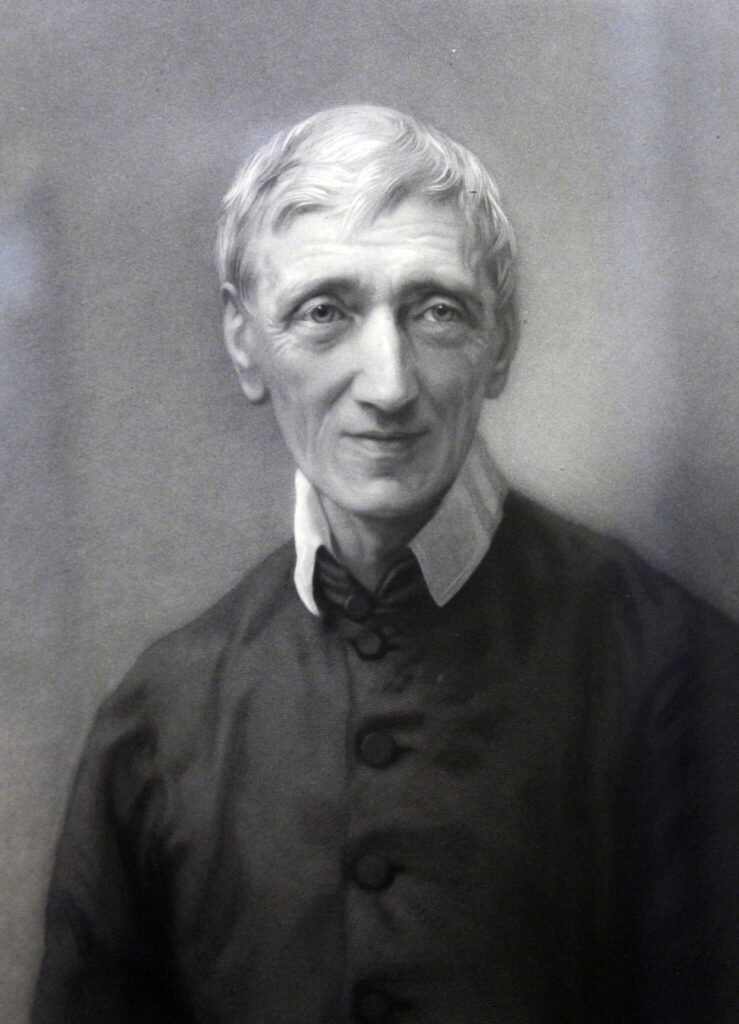

On Sunday, November 2, Northminster will add an extra element to our usual order of worship – a necrology. Names of church members who have died in the past 12 months will be read aloud and followed by a single chime. It’s a simple but meaningful ritual, a practice that reminds us of two important truths about our faith. But first, a bit of history.
In the Roman Catholic Church, All Saints Day is annually celebrated on November 1st, while All Souls Day is November 2nd. In many Protestant denominations, the first Sunday in November unites these celebrations on what we call All Saints Sunday.
While there are understandable differences between Catholic and Protestant traditions, a central theme in each is celebrating the transition of believers from the Church Militant to the Church Triumphant, that is, recognizing and rejoicing with all those Christians who have finished their work on earth and now abide with God in heaven.
The first truth this celebration brings to our attention is that all Christians are saints. Both the Hebrew (OT) and Greek (NT) words translated “saint” come from a root that means “holy.” To be holy is to be set apart by God in order to serve God. Paul describes saints as “those sanctified in Christ Jesus, called to be saints together with all those who in every place call upon the name of our Lord Jesus Christ, both their Lord and ours” (1 Cor. 1:2).
Here Paul shows us that sainthood, which is also called sanctification, (being made holy), is both a position and a process. As God’s chosen people, we have been made holy through the work of Jesus Christ on the cross. We are being made holy through our cooperation with the work of the Holy Spirit in and through us. And one day we will be made holy as we reunite with the saints who reached heaven before us.
As in our worship on All Saints Sunday we remember the saints of this congregation who now worship God in heaven, we are also reminded of a second truth – that our Christian faith is built on a firm historical foundation.
I affirm the observation made by church historian Bruce Shelley, who writes: “Many Christians today suffer from historical amnesia. The time between the apostles and their own day is one giant blank. That is hardly what God had in mind.”[1]
I suspect not many of us could cite chapter and verse of the history of Northminster Evangelical Presbyterian Church. I’m quite sure vast numbers of Presbyterians have little knowledge about the ecclesiastical developments that followed Martin Luther’s 95 Theses. Even more know less about the first 1,500 years of Christian history and theology. Such knowledge gaps impede our growth as individual Christians and as a congregation. For if we don’t know how we got to where we are, where we go next is anybody’s guess.
This All Saints Sunday, let’s rejoice with the souls we have known who now rest from their labors. And in the year between this celebration and the next, let’s spend some time looking back so that we might more clearly see the way ahead.

“Hear this word, you cows of Bashan,
who are on the mountain of Samaria,
who oppress the poor, who crush the needy,
who say to your husbands, ‘Bring, that we may drink!’” — Amos 4:1
This morning I read an article in The Atlantic, “The Innovation That’s Killing Restaurant Culture.” From the article: “In 2024, nearly three out of every four restaurant orders were not eaten in a restaurant, according to data provided to me by the National Restaurant Association, a trade group. The share of customers using delivery specifically, as opposed to picking up takeout or going to a drive-through, more than doubled from 2019 to 2024. In a recently released poll by the association, 41 percent of respondents said that delivery was ‘an essential part of their lifestyle.’”
It’s difficult to understate the impact this is having on the restaurant industry. Restaurants are adapting their menus to be more cost effective and provide food that travels better. Kitchens are getting bigger, seating areas smaller. Some new restaurants aren’t designed for in-person dining at all. Ellie Cushing writes, “In effect, delivery has reversed the flow of eaters to food, and remade a shared experience into a much more individual one. If communities used to clench like a fist around their restaurants, now they look more like an open palm, fingers stretched out as far as possible, or at least to the edge of the delivery radius.”
It’s too easy to blame this shift on the pandemic, although the pandemic certainly accelerated it, as it did many other things. Like so much else, these shifts started long before a virus shut us all up inside our homes. The seismic shift happened back in the early 2000s with the dual supernovas of the development of the internet and smartphones. Twenty or so years later, every facet of our lives has radically changed. Winston Churchill once said, “We shape our buildings and afterward our buildings shape us.” We now have the ability to sit at home and have the world brought to us on a whim, but at what cost? How is that convenience shaping us?
The “cows of Bashan” were the ancient equivalent of Wagyu beef today. They were meticulously doted over and cared for so as to provide the absolute highest quality meat possible. When Amos calls the Israelites the cows of Bashan, he is saying they are lazy, fat, and indolent. As Michael McKelvey writes, Amos is painting a picture of a people who “defiantly and selfishly take advantage of others, using them for their own ends. Their concern is not for what is morally right or socially acceptable. Instead, they live unto themselves; their god is their belly.” Feeding their desires and appetites by any means necessary, they cared not at all about the consequences of their self indulgence. One might argue whether we are more or less self-indulgent than the ancient Israelites, but one thing is true: we have not counted the cost we are paying for our cultural smartphone addiction. It’s been 2,800 years since Amos wrote his prophecy, but it has come true in far more visceral ways than he ever imagined.
What makes dining at a restaurant special isn’t simply that someone else is cooking for you. It’s the entire experience. It’s the sensory experience of the aromas and the ambiance, but more than that it’s the relational experience — from the welcome extended by the host, to the courtesy of the waitress, to the attention given to your meal by the chef, to the shared fellowship of those with whom you dine. None of that can be put in a box and delivered to your door. What is lost without those experiences goes far beyond the scope of these words. This barely scratches the surface; we haven’t talked about the impact on families, jobs, the economy, and much more.
However, Amos wasn’t talking about having food delivered to your door, and neither are we. Have we taken the time to consider what we are losing by doordashing our worship, our discipleship, or our fellowship? We worship by turning on the radio or Spotify. We get our discipleship from TikTok. We find fellowship through social media. All from the comfort of our couches. But true faith is inescapably relational and experiential. True worship happens when we are gathered together with the saints (Hebrews 10:25). Discipleship occurs when “iron sharpens iron” (Prov. 27:17). Fellowship, which at its root means “connection,” requires being physically present with one another (Acts 2:42). Modern technology is reshaping everything, but it can’t change the fundamental paths of our faith.
There’s nothing necessarily wrong with doordashing your dinner when you need to, or using Spotify or TikTok. But be aware of what you are choosing when you do so, and what you are not choosing as well. Be intentional in being wise and discerning when it comes to your worship, discipleship and fellowship. Make the effort to pursue Jesus in the company of other brothers and sisters. In person. Much like dining out, our faith was never meant to be an individual experience, but a communal one.
Finally, brothers and sisters, whatever is true, whatever is honorable, whatever is just, whatever is pure, whatever is lovely, whatever is commendable, if there is any excellence, if there is anything worthy of praise, think about these things. What you have learned and received and heard and seen in me—practice these things, and the God of peace will be with you. — Philippians 4:8-9
Blessings,
Rev. David Garrison

Quick, what’s the first image that comes to mind when you read the words “Holy Spirit?”
A dove? Tongues of fire? A mighty wind?
Did anyone choose “rivers of living water?” Me either.
Although the connections between the outpouring of God’s Holy Spirit and rivers of living waters probably aren’t top of mind for any of us, they are linked in three easily overlooked verses from the seventh chapter of John’s Gospel:
37 On the last day of the feast, the great day, Jesus stood up and cried out, “If anyone thirsts, let him come to me and drink. 38 Whoever believes in me, as the Scripture has said, ‘Out of his heart will flow rivers of living water.’” 39 Now this he said about the Spirit, whom those who believed in him were to receive, for as yet the Spirit had not been given, because Jesus was not yet glorified. (John 7:37-39, ESV)
The feast, as we learn at the outset of John 7, is the Feast of Booths or Tabernacles (in Hebrew, Sukkot). The seven-day feast, celebrated in the Fall, was a time both to remember God’s past provision for Israel in the wilderness and to praise God for the harvest that had just been gathered. Since late autumn usually brought a drought, this festival also was a time of corporate prayer that God would refresh the land and refill the cisterns by sending once again his life giving rain.
This context helps us understand why a water bearing ceremony was central to Sukkot. Each day of the feast, priests would use a golden pitcher to draw water from Jerusalem’s Pool of Siloam. They would then bring the water to the Temple where it would be mixed with wine and poured out on the altar as a drink offering. This ceremony was accompanied by joyful music, dancing, and huge public celebrations, a fulfillment of Isaiah 12:3, “With joy you will draw water from the wells of salvation.”.
Earlier in John’s gospel, Jesus had told the Samaritan woman at the well, “Everyone who drinks of this [well] water will be thirsty again, 14 but whoever drinks of the water that I will give him will never be thirsty again. The water that I will give him will become in him a spring of water welling up to eternal life” (John 4:13-14). Now, at the Feast of Booths, he plainly tells his disciples that the living water he had promised was the gift of the Holy Spirit.
In these few words, spoken on the last day of the feast, Jesus laid a foundation that later would help his disciples understand the Holy Spirit’s connection to his own person and work. In the moment, Jesus’ first disciples couldn’t fully grasp the meaning of his words. But once he was “glorified,” John’s term for Jesus’ crucifixion and resurrection, the Spirit would be poured out in all his fullness. That outpouring wouldn’t end with the disciples in Jerusalem on the first Christian Pentecost. Those disciples would themselves become conduits through whom rivers of living water would continue to flow.
Today, you and I are Jesus’ disciples. One of our responsibilities is to continue to let the presence and the power, the goodness and the blessings, of God’s Holy Spirit flow through us and thereby nurture and nourish a dry and weary land.
Quick, what’s the first image that comes to you mind when you read the words “Holy Spirit?”
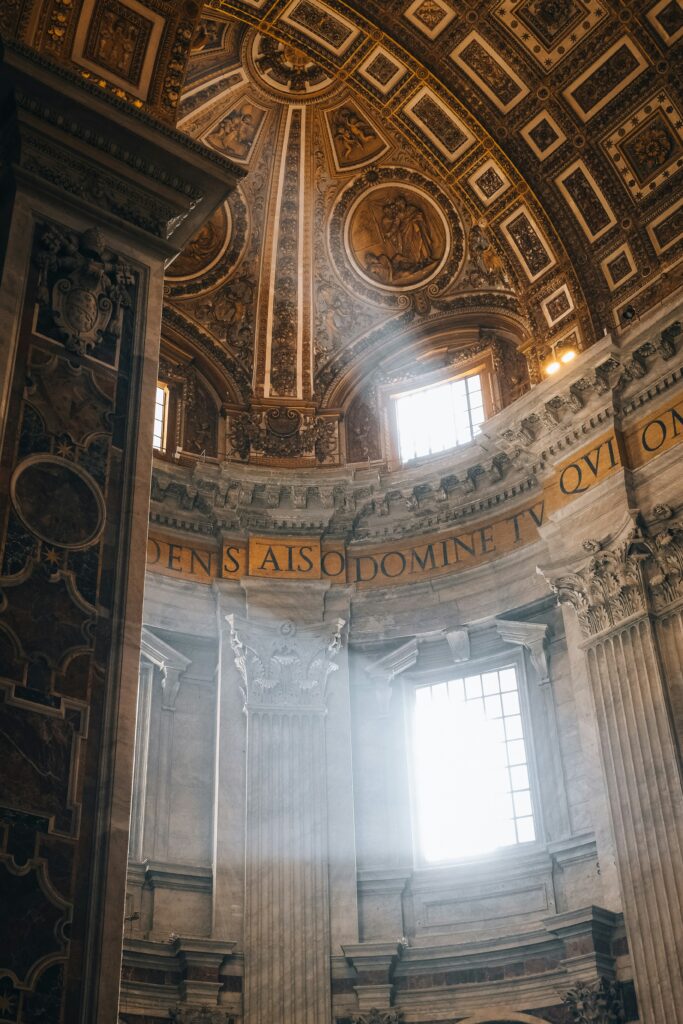

“My name will be great among the nations, from the rising to the setting of the sun. In every place incense and pure offerings will be brought to my name, because my name will be great among the nations,” says the LORD Almighty. — Malachi 1:11
One evening several weeks ago, my daughter came to me with a question. She had just read the story of Moses and the burning bush (Exodus 3). When God speaks to Moses out of the burning bush we’re told that “Moses hid his face, for he was afraid to look at God.” (Exodus 3:6) My daughter didn’t understand why Moses would’ve been afraid. Since our God is a loving God (Jeremiah 31:3, one who is merciful and gracious (Psalm 86:15), who treats us with tenderness (Luke 1:78) and gentleness (1 Kings 19:12), why would we be afraid of Him?
I think a lot of us approach God in a similar manner. We have heard so much about the love and grace of God that fear has fallen by the wayside. After all, “God gave us a spirit not of fear but of power and love and self-control.” (2 Tim. 1:7) But I think we are misunderstanding how the Bible is using the word “fear” when it comes to our relationship with God. There is “fear” in the sense of terror and fright (which is what most of us think of), but there is also “fear” in the sense of awe and reverence. As the Dictionary of Biblical Imagery explains, “The fear of God is distinct from the terror of him that is also a biblical motif. Encompassing and building on attitudes of awe and reverence, it is the proper and elemental response of a person to God… The very frequency of the references signals that the fear of God is central to biblical faith, and the relative absence of this ancient way of thinking in our culture should give us pause.”
If we do not have a proper awe and reverence for God, then we lose just how radical and powerful His grace, mercy and love truly are. The God we serve is an all-powerful, almighty, glorious, holy, righteous God. He spoke, and stars and planets burst forth (Genesis 1:14). He moves His hand, and waters part (Exodus 14:21-25). He measures galaxies with the width of His hand (Isaiah 40:12). He binds the Pleiades and looses the cords of Orion (Job 38:31). He gives orders to the morning (Job 38:12), and maintains the storehouses of snow and lightning (Job 38:22-30). He is a God who rides thunderstorms to rescue His children (Psalm 18, specifically verses 6-15). When God says “My name will be great among the nations,” (Malachi 1:11) He does not do so as a braggart but as the only One who can rightly claim and demand such greatness. When we think of our God, a fearful awe and reverence is an essential component. “It is a dreadful thing to fall into the hands of the living God.” (Heb. 10:31)
The warning to fear God echoes in both the Old and New Testaments. “Consider then and realize how evil and bitter it is for you when you forsake the LORD your God and have no awe of me,” declares the Lord, the LORD Almighty.” (Jer. 2:19) When we think of God’s goodness, fearing Him should be included: “I will make an everlasting covenant with them: I will never stop doing good to them, and I will inspire them to fear me, so that they will never turn away from me.” (Jer. 32:40) And Jesus Himself, God incarnate, says, “But I will warn you whom to fear: fear him who, after he has killed, has authority to cast into hell. Yes, I tell you, fear him!” (Luke 12:5) We focus so much on Jesus as “gentle, meek and mild” that we forget the disciples quaked in terror of Him after He calmed the storm (Mark 4:35-41). Even at the end of history, when Jesus returns in power and glory and evil is destroyed forever, when everything sad comes untrue and every broken thing is made whole, we are told, “Fear God and give him glory, because the hour of his judgment has come. Worship him who made the heavens, the earth, the sea and the springs of water.” (Rev. 14:7)
It is because our God is very much a God to be feared (first in awe and reverence, but also with a dose of terror and fright) that the good news of His grace and mercy is so very good indeed. That, for those who accept Jesus Christ as Lord and savior, there is no longer need to fear God’s righteous judgment. All of the things the Bible says of God’s gentleness and tenderness, His kindness and His mercy, His steadfast lovingkindness, are all true, and made all the more awe-ful and awe-some because of His might, power and majesty. Grace is all the more amazing when we maintain a healthy and appropriate fear of the Lord. As we continue to draw ever closer to the darkness of Good Friday and the triumph of Easter Sunday, may the fear of the Lord deepen your gratitude and faith this Lenten season.
The fear of the LORD is the beginning of knowledge,
but fools despise wisdom and discipline. — Proverbs 1:7
Blessings,
Rev. David Garrison

If someone does make a cake for the occasion, I’d like to be there when the candles are lit. The occasion is the 1700th birthday of the Nicene Creed. While I doubt anyone will make a cake, at least not one with 1,700 candles, I believe the event is certainly worth celebrating. Here is a short look at why.
Early Creeds
Our English word “creed” comes from the Latin credo, which means, “I believe.” A creed, broadly defined, is a statement of what it is that I believe. More technically, in the Christian tradition a creed is a concise, formal, and authorized statement of essential Christian doctrine.
The earliest Christian creed was spoken by Peter and recorded in Mark 8:29. At Caesarea Philippi, in response to Jesus’ question, “But who do you say that I am,” Peter, inspired by the Holy Spirit, replied, “You are the Christ.” Writing to the Philippians some three decades later, Paul concluded his marvelous Hymn to Christ with what remains the foundational creed of Christianity, “Jesus Christ is Lord” (Phil. 2:11).
But after the last apostle had died, after the canon of Scripture had been closed, Christians began to sense a need for clear and succinct summaries of the basic doctrines of their faith. So they drew on the language of Scripture to formulate brief statements of their core beliefs. The most prominent of these – the Apostles’, Nicene, and Athanasian Creeds, are still accepted (with some variations) by the Roman Catholic, Eastern Orthodox, and most Protestant denominations.
Creeds Today
Today, many congregations still make use of these creeds along with their longer, younger cousins, confessions. For example, the Evangelical Presbyterian Church, to which Northminster belongs, uses the Westminster Confession of Faith and its catechisms as our doctrinal standards. In Sunday morning worship, we often recite in unison sections of this Confession. Other Sundays we say the Nicene or Apostles’ Creed. These public affirmations of our faith remind us of what we believe about the nature and work of God the Father, God the Son, God the Holy Spirit, and the Church.
Creeds also have uses outside Christian worship. In his book This You Can Believe, John Brokhoff describes three purposes these historic creeds and confessions continue to serve in the Church today. The three purposes are: definition, defense and declaration.
Definition, The first purpose of creeds, Brokhoff writes, “is to define the Christian faith. What does a Christian believe? Are your beliefs in harmony with the Scriptures and the Church’s teachings?” Once we have learned Nicene Creed, we will always have an answer to fundamental questions about our faith.
Defense is the second purpose of creeds. Even before the last apostle had died, some in the Church were attempting to redefine the Christian faith. By 325, a young pastor named Arius was causing divisions in the Church by denying the Church’s historic teaching that Jesus was both fully God and fully human. Crafting language we still use today, the authors of the Nicene Creed decisively refuted that false teaching.
The third purpose of creeds is Declaration. Knowing the Nicene Creed helps us fulfill Jesus’ command to be his witnesses. The Creed is a positive, fearless declaration of the essentials of our faith. It is not just for church on Sunday mornings. We can use it to declare our faith in our everyday lives.
Happy Birthday, Nicene Creed. And someone please let me know about the cake. It would give a lot of light.

“The hour has come for the Son of Man to be glorified. Truly, truly, I say to you, unless a grain of wheat falls into the earth and dies, it remains alone; but if it dies, it bears much fruit. Whoever loves his life loses it, and whoever hates his life in this world will keep it for eternal life. If anyone serves me, he must follow me; and where I am, there will my servant be also. If anyone serves me, the Father will honor him.” — John 12:23-26 ESV
As I’ve been contemplating and praying through this passage recently, something particular stood out to me. This teaching from Jesus is given on Palm Sunday, shortly after the Triumphant Entry. Having seen the festive procession as Jesus entered Jerusalem and the Temple Mount, some Greeks “came to Philip, who was from Bethsaida in Galilee, and asked him, ‘Sir, we wish to see Jesus.’ Philip went and told Andrew; Andrew and Philip went and told Jesus.” (John 12:21-22 ESV) The passage above is Jesus’ response to their request. If you pause for just a moment and think about it, it’s a really, really weird answer. They ask to see Jesus, and Jesus says, “Unless a seed die, it can not bear much fruit.” Ok. Right. Good to know. But can you have a chat with these folks or not?
The entirety of his answer comes in John 12:23-36, with verse 32 explaining and expanding verse 24: “24Truly, truly, I say to you, unless a grain of wheat falls into the earth and dies, it remains alone; but if it dies, it bears much fruit… 32And I, when I am lifted up from the earth, will draw all people to myself.” What was surely confusing to the disciples and the Greeks who wanted to see Jesus is crystal clear to us: In order for the Greeks, or anyone actually, to see see Jesus truly, He first needed to die and rise from the dead. Through the death of the one seed, Jesus Christ, the fruit of the Gospel exploded throughout the world.
There’s a lot to unpack in these short verses, and maybe we’ll do that over the next few months, but for now, consider this. Autumn, for all of its beauty, is a season of dying. The leaves change color because they’ve stopped producing chlorophyll; they’ve started to die. The seeds the trees have been growing all year long fall to the ground. The crops have finished their season of growth and are starting to ripen. The harvest is being gathered in. And yet none of that is an end. All of that is used to begin the process of new life and growth. That new life and growth won’t be evident until months of gestation have passed, but life, and life abundant, will burst forth. Watching the leaves fall it seems like the promise of that new life is an eternity away, but once spring comes ‘round it will be as if a mere moment has passed.
God created the natural world to work the way it does because it illustrates His truth (Psalm 19:1-4). In God’s great redemptive work, nothing is wasted. Even death, that which seems like the ultimate and permanent ending, becomes the seed and soil that nurtures exponentially more life. There is great comfort in knowing that when we die there will be a double blessing: We will be blessed by rising to eternal life with Jesus (1 Cor. 15:52-54) and the Kingdom of God will be blessed as God takes our dying and uses it to glorify Himself and bring forth abundant new life (John 12:27-28).
The future is always scary, because from our finite perspective it’s so uncertain. But it isn’t, really. God is not just God of the past and present, He is God of the future as well. What seems uncertain and constantly changing for us is sure and certain for God. It is because God holds the future in His hands that we can know with absolute certainty nothing that happens will go to waste, not even death. Leaves die and fall and decompose to provide the nutrients that the seeds that fell need in order to give life to much new fruit. What is true in nature is true in us. And what is true in us is true in the Church as well.
For we know that the whole creation has been groaning together in the pains of childbirth until now. And not only the creation, but we ourselves, who have the firstfruits of the Spirit, groan inwardly as we wait eagerly for adoption as sons, the redemption of our bodies. For in this hope we were saved. Now hope that is seen is not hope. For who hopes for what he sees? But if we hope for what we do not see, we wait for it with patience. — Rom. 8:22-25 ESV
Blessings,
Rev. David Garrison
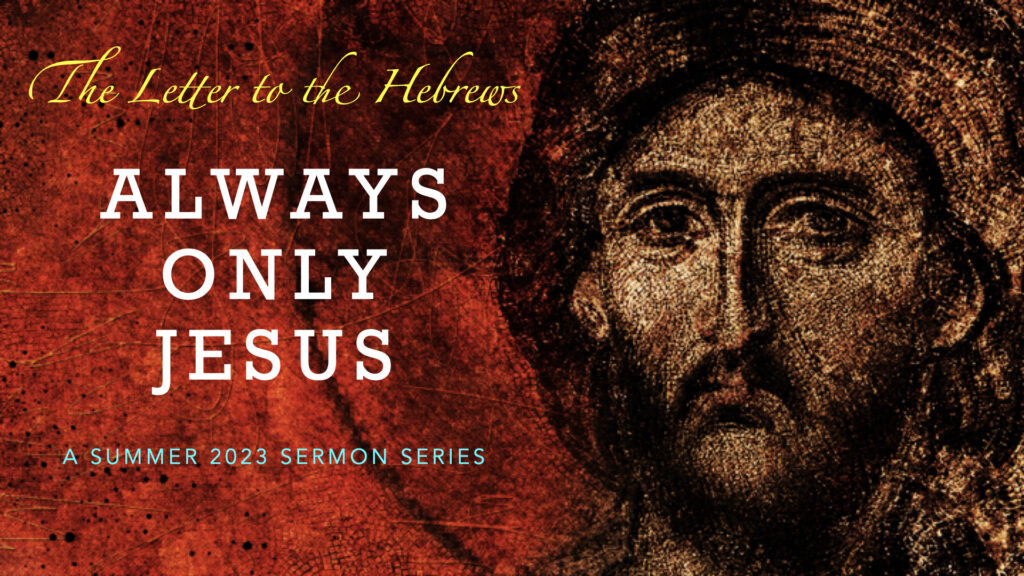
Long ago, at many times and in many ways, God spoke to our fathers by the prophets, but in these last days he has spoken to us by his Son, whom he appointed the heir of all things, through whom also he created the world. He is the radiance of the glory of God and the exact imprint of his nature, and he upholds the universe by the word of his power. After making purification for sins, he sat down at the right hand of the Majesty on high, having become as much superior to angels as the name he has inherited is more excellent than theirs. — Hebrews 1:1–4
I had a conversation with a friend a few weeks ago about faith and spirituality. He was sharing with me the story of his own faith journey and how he’d come to believe in the divine spirit, that sense of love, peace and acceptance that is so essential to human existence. It was an impersonal spirit that accepts no matter who we are, loves no matter what we’ve done, is always present no matter how far we run. It was an interesting conversation because it was so full of half truths, while missing some of the most important truths of all. It’s actually kind of marvelous, because you get all the benefits of a personal relationship with God, without any of the pesky things that come along with a God that is actually intimately, personally present in our lives and actually expects anything of us.
We live in a time where “spirituality” is perhaps more important to people now than ever before. It’s a somewhat unexpected development, given modernity’s efforts to eradicate the spiritual from all areas of life. Where many feared what postmodernism might do to matters of faith, it turns out that the door has been opened in many unexpected ways. The door hasn’t just been opened, it’s actually been flung wide, so that it’s almost an “anything goes” spirituality. When people talk about their faith and spiritual journey, like my friend above, it’s almost always a belief in a non-specific, impersonal “deity” that only loves and never rebukes, always accepts and never holds accountable. If we’re honest, many of us have allowed these kinds of ideas to get woven into the fabric of our faith as well. While we say it’s “always only Jesus,” in practice our faith is a lot of “Jesus and…”
That’s why the Letter to the Hebrews was written. As Eugene Peterson writes,
In the letter, it is Jesus and angels, or Jesus and Moses, or Jesus and priesthood. In our time it is more likely to be Jesus and politics, or Jesus and education, or even Jesus and Buddha. This letter deletes the hyphens, the add-ons. The focus becomes clear and sharp again. God’s action in Jesus. And we are free once more for the acts of faith, the one human action in which we don’t get in the way but on the Way.
This summer, we’re going to get back to Always Only Jesus, with the book of Hebrews as our guide. We’ve all added on to our faith, probably without even realizing it. Let’s shed the extra baggage and get back to living the free and light life of faith Jesus died to bring us. We look forward to worshipping with you.
Now may the God of peace who brought again from the dead our Lord Jesus, the great shepherd of the sheep, by the blood of the eternal covenant, equip you with everything good that you may do his will, working in us that which is pleasing in his sight, through Jesus Christ, to whom be glory forever and ever. Amen.
— Hebrews 13:20-21
Blessings,
Rev. David Garrison