
My academic career began at Elmer Elementary School. Had I been born a decade or so earlier, it would have started at Elmer Grammar School. The Borough of Elmer changed the name somewhere between the late 1940s and my kindergarten year of 1961. Not even the AI-enhanced Internet could find the exact year, but I’m not surprised that my small, agrarian hometown was at the trailing edge of the curve.
The shift from Grammar to Elementary had been underway nationwide since the mid-1800s. By 1920, students in every state were required to complete at least a few early grades of schooling. As the states became more involved in content and delivery of young children’s education, the Elementary School label quietly became canonical. At the time, few Americans realized that this shift was more than bureaucratic or cosmetic. But that’s a topic for another article. Here I’d like to say just a bit about the word that traversed the slippery slope from out of sight to out of mind – grammar.
Grammar is perhaps most simply described as how a language works. It had long been a staple of American education. Studying grammar, both English and Latin, gave students the tools to understand and evaluate both the written and the spoken word. These skills in turn equipped nascent citizens to speak and write with clarity and confidence. Such abilities proved valuable not only in the academic realm, but also in Christian faith and life.
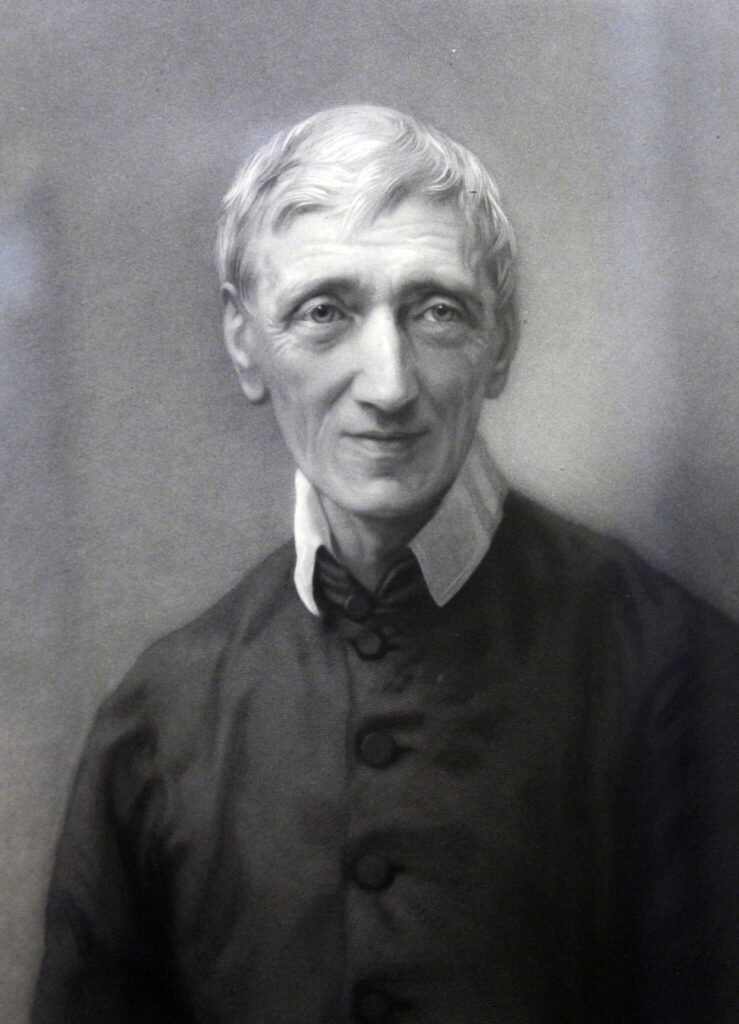
A British writer who recognized the Christian value of such rigorous studies was John Henry Newman (1801-1890). Newman began his Christian journey as an Anglican. He converted to Catholicism at the age of 44, became a priest three years later, and eventually was made a cardinal. Whether as an Anglican or a Catholic, much of Newman’s ministry involved teaching and writing.
In 2019 he was declared a saint by Pope Francis, the patron saint of Catholic universities, colleges, and schools and also of poets. In 2025, Pope Leo XIV declared Newman a Doctor of the Church, a title granted to saints whose writings and teachings are of particular importance. One of Newman’s most influential books, An Essay in Aid of a Grammar of Assent, sparked this article.
(And, if you’ll forgive me a shameless bit of advertising, Newman’s book will make a significant contribution to the Sunday school class and the sermon on April 12, when I’ll be filling in for Pastor David. In Sunday school, we’ll explore the main themes of this book, In the sermon, we’ll draw on Newman’s insights to illumine the Apostle Thomas’ transition from troubling doubt to bold faith.)
The Grammar of Assent, as this work is popularly known, is a careful study of how Christians learn to say Yes to what God did for us “before the foundation of the world” (Eph. 1.4). In this beautifully written volume, Newman helps us understand and experience the grammar of God’s grace. Just as English grammar helps us see clearly, think rightly, and experience fully the wonders of God’s good creation, so God’s grammar schools us in ways that help us better recognize, understand, and participate in God’s free gifts of grace and faith.
As Paul assures us: “For by grace you have been saved through faith. And this is not your own doing; it is the gift of God, not a result of works, so that no one may boast” (Eph. 2:8-9).
