106 Clearview Rd, Madison Heights VA, 24572
Northminster Church © 2017
Find us on


This is what the Sovereign LORD, the Holy One of Israel, says: “In repentance and rest is your salvation, in quietness and trust is your strength, but you would have none of it.” – Isaiah 30:15
The situation in Isaiah 30 is about as bad as it can get. The Assyrian Empire is growing and expanding, and Israel and Judah stand between it and Egypt. Basically, Israel found itself between a rock (Assyria) and a hard place (Egypt). The threat wasn’t imaginary, nor was it implied — it was very literal, and very visceral, and completely overwhelming. Both the northern kingdom of Israel and the southern kingdom of Judah knew that, without help, they didn’t stand a chance. There’s a lot of politics and a lot of history in this story, but for the sake of this article, the point is that both Israel and Judah found themselves facing a massively overwhelming force they were utterly incapable of dealing with themselves. It was the working definition of a doomsday scenario.
We often find ourselves facing our own doomsday scenarios. There is a lot to be afraid of in our world and our lives, and many of those threats are absolutely overwhelming. Some of them are more literal, like when you lose a job, your marriage starts to fall apart, or a natural disaster threatens. Others are more imaginary, such as how political candidates predict the end of life as you know it if their opponent wins. Perhaps it is the ambiguity of those predictions make the threats more frightening. Whether real or imagined, literal or figurative, the end result is the same: we find ourselves facing a massively overwhelming situation we know we are utterly incapable of dealing with ourselves.
During one poignant scene in Batman Begins, a young Bruce Wayne falls down a well into a cave. As we see his father rappelling down the well to rescue Bruce, he says, “Why do we fall down, Bruce? So we can learn to pick ourselves up.” That mentality is deeply embedded in our culture. The only one who is going to save you, is you. You need to fix your problem, you need to pick yourself back up, you need to do the hard work, you need to find someone or some thing to help you out of your situation. After all, we all know that God helps those who help themselves… which, if you take a moment to think about it, is kind of ridiculous. If I’ve already helped myself, then what do I need God to do?
Israel and Judah faced an overwhelming force they were incapable of dealing with themselves, so what did they do? They tried to deal with it themselves. They tried to figure it out using their own wisdom and strength. They tried asking Egypt for help. They made plans to flee. They tried ignoring the obvious evidence in front of them, thinking (hoping) Assyria would just ignore them. They paid lip service to trusting God (see Isaiah 7:10-12), but only trusted in themselves. Much of Isaiah is calling Israel out for this. As Isaiah says, “‘Woe to the obstinate children,’ declares the LORD, ‘to those who carry out plans that are not mine, forming an alliance, but not by my Spirit, heaping sin upon sin; who go down to Egypt without consulting me; who look for help to Pharaoh’s protection, to Egypt’s shade for refuge.’” (Is. 30:1-2) Their failure was not that they tried to make an alliance with Egypt, or that they developed plans for how to deal with the “Assyrian problem.” Their sin was that they didn’t turn to the Lord first. They didn’t ask Him what they should do. They didn’t seek His direction. They didn’t turn to the One who is their refuge and their strength (Psalm 46:1).
The means of our deliverance, as verse 15 states (quoted at the beginning), is through repentance and rest, through quietness and trust. It is by turning to the Lord at the beginning of our woes, not waiting until the end of our rope. Time and again we are told to let the Lord fight our battles. Notice what happens every time Israel went into battle: God overwhelmingly stacks the deck against Israel. Even when Israel showed up with military might and power, God had them send soldiers home, and not just some, but almost all (see Judges 7), so that no one would question who it was who delivered them. Yahweh is our deliverer, in Him is our salvation and strength. If we will let him. If we will receive the salvation He offers.
The doomsday scenarios that lie before you are probably very real, and I have no doubt they are overwhelming. Most everyone around you will tell you that you would be foolish to trust in the Lord. But trusting in the Lord doesn’t mean you shouldn’t use your wisdom, or that you shouldn’t seek help from others. It does mean asking God what you should do first, letting the Holy Spirit guide you in the steps you should take, and trusting that however God chooses to deliver you, even if it doesn’t make sense in the moment, is the right and the best way. There is no problem too big for God to handle, no threat so overwhelming that He can not handle it. And He wants us to bring it all to Him in prayer, trusting that because we know He loves us, He will deliver us… in His way, and His time. Be still and know that He is God. Be still and know that He will fight the battle for you. Repent of your distrust, and rest in His salvation.
Trust in the LORD with all your heart and lean not on your own understanding; in all your ways submit to him, and he will make your paths straight. Do not be wise in your own eyes; fear the LORD and shun evil. — Proverbs 3:5-7
Blessings,
Rev. David Garrison
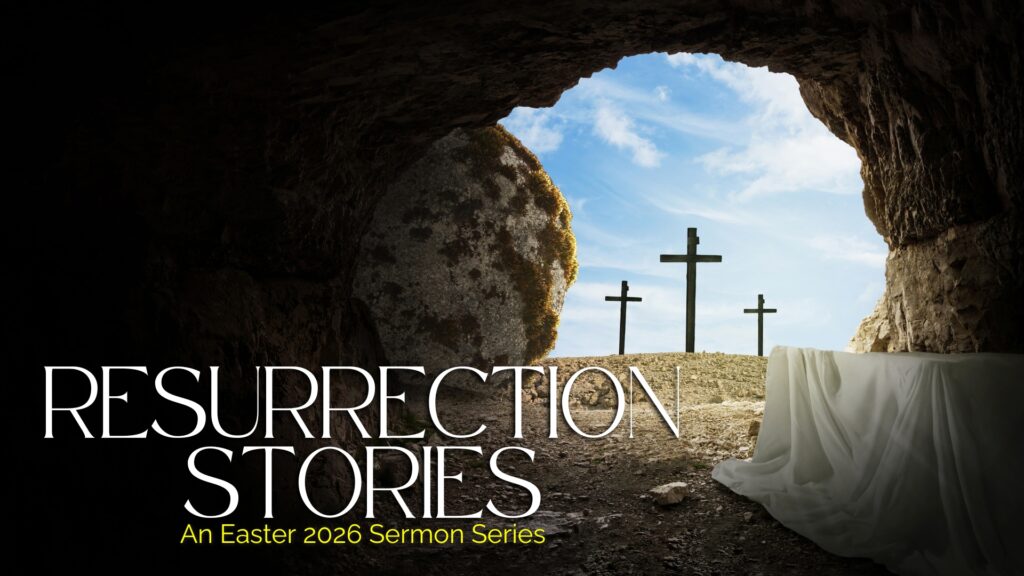
“We are witnesses of everything he did in the country of the Jews and in Jerusalem. They killed him by hanging him on a tree, but God raised him from the dead on the third day and caused him to be seen. He was not seen by all the people, but by witnesses whom God had already chosen—by us who ate and drank with him after he rose from the dead. He commanded us to preach to the people and to testify that he is the one whom God appointed as judge of the living and the dead.” (Acts 10:39-42)
The season of Easter is 50 days and runs from Easter Sunday through Pentecost. In much the same way that the season of Epiphany provides an intentional period of time to allow the wonder of the Incarnation to settle on our souls, the season of Easter provides the same for the Resurrection of Jesus Christ. These events (the birth and resurrection of Jesus) are momentous enough that they warrant their own particular days, but it takes time to begin to realize how truly transformative they were — for ourselves and for the world.
It can be easy for us to rocket past the stories of the appearances of Jesus after the Resurrection. Each Gospel only gives a chapter or two to them (Mark skips them altogether, mentioning only the empty tomb). But that brevity does not reduce their importance. All of the Apostles place a lot of stress on the fact that they were eyewitnesses to the Resurrection. John uses the word “see” eleven times in chapter 20 of his gospel. In every one of his sermons in the book of Acts, Peter speaks of having seen Jesus. In 1 Corinthians 15:3, Paul says that the bodily appearance of Jesus to the Apostles is of “first importance,” and goes on to list those appearances. Adding them up, well over 500 people bore first-hand witness to the resurrection of Jesus.
This is important because it means that the resurrection of Jesus Christ from the dead is true. Jesus was fully and truly dead, placed in a sealed tomb for 3 days, and then that stone was rolled away and the tomb was empty. He was not only seen alive, but he was touched and embraced by hundreds of people. It only takes three eye witnesses to attest legally to the truth of something, and here we have over 500 who saw him and dozens who touched him. This is why Paul says that the bodily resurrection of Jesus Christ is “of first importance,” and this is why the Apostles repeatedly state that they saw Jesus alive after His resurrection.
If the resurrection is physically true, then it is the proof that what Jesus said He came to do is spiritually true. The resurrection is the proof that Christ’s atoning sacrifice on the cross was effective, which means that all of our sins have been paid for. The resurrection is the proof that Jesus defeated the power of death and mortality. The resurrection is the proof that because He went from death to life, we too shall move from death to life. The resurrection is the proof that not only do have hope in this life, but also in the life to come. Because He lives, we too shall live. If Jesus was not raised from the dead, then “your faith is futile; you are still in your sins. Then those also who have fallen asleep in Christ are lost. If only for this life we have hope in Christ, we are to be pitied more than all men.” (1 Corinthians 15:17-19)
But, the resurrection stories make clear that Jesus Christ has been raised from the dead. The stories are true. That’s why the Apostles were so excited to tell everyone they could about Jesus. That’s why 2,000 years later we’re still telling everyone we can about Jesus. In the New Testament we find the Apostle’s resurrection stories about Jesus. What is your resurrection story? How have you seen Him in your life? How has He moved you from death into life? In what ways has His resurrection given you strength for today and bright hope for tomorrow? Take some time to reflect on those questions, and go tell someone about Him. The news is good, because the news is true: The tomb is empty, our Savior lives, and because He lives, we too are able to live!
The best stories, though, aren’t just the ones we tell, they’re the stories we live. In Matthew 7, the difference between the wise and foolish builders is whether they followed Jesus obediently. Jesus’ brother James writes, “What good is it, my brothers, if a man claims to have faith but has no deeds? Can such faith save him?” (James 2:14) Paul picks up the idea of moving from death to life and says, “In the same way, count yourselves dead to sin but alive to God in Christ Jesus. Therefore do not let sin reign in your mortal body so that you obey its evil desires.” (Romans 6:11-12) Tell the story of the resurrected Jesus with what you say, but even more with how you live.
Jesus did many other miraculous signs in the presence of his disciples, which are not recorded in this book. But these are written that you may believe that Jesus is the Christ, the Son of God, and that by believing you may have life in his name. — John 20:30-31
Blessings,
Rev. David Garrison

Westminster Larger Catechism Q. 154. What are the external ways Christ uses to bring us the benefits of his mediation? A. The ordinary external ways Christ uses to bring the benefits of his mediation to his church are his regulations, particularly the word, sacraments, and prayer, all of which are made effective for the salvation of his chosen ones.a
a.. Mt 28.19-20, Acts 2.42,46-47, 1Tm 4.16, 1 Cor 1.21, Eph 5.19-20, 6.17-18.
We are a culture that is obsessed with the extraordinary. As Michael Horton writes in his book, Ordinary, “We’ve become accustomed to looking around restlessly for something new, the latest and greatest, that idea or product or person or experience that will solve our problems, give us some purpose, and change the world… Who wants a bumper sticker that announces to the neighborhood, ‘My child is an ordinary student at Bubbling Brook Elementary’?”1 We chase after “mountaintop” spiritual experiences, launch mission and evangelism efforts that will “take this city for Jesus,” believing that the only way to actually make a “real difference” (whatever that means) is to do something, well, extraordinary on behalf of Jesus and the Kingdom of God. I have been wondering lately if we haven’t gotten the extraordinary ends that God is able to achieve mixed up with the ordinary means by which He goes about doing so.
In Reformed theology, the phrase, “the ordinary means of grace” refers to the proclamation of the Word of God, the right exercise of the Sacraments, and the regular practice of prayer. These are the “ordinary,” as in primary but not only, means by which God brings His transforming grace and power into our lives in order to make us into the new creations He intends and desires us to become. As Thomas Vincent explains, “the ordinances are the most usual way and means of conversion and salvation, without the use of which we cannot, upon good ground, expect that any benefit of redemption should be communicated to us.”2 They are also “ordinary” in the sense that there is nothing particularly outlandish or unique about them. The scriptures have existed in their current state for almost 2,000 years. The sacraments make use of everyday items — water, bread, and wine (or juice). Prayer is something we are able to do at any time, in any place; while formal and ritualized prayers have their place and benefit, we can also kneel down beside our bed at night. There is very little that is revolutionary, radical, or groundbreaking about them. And while God certainly works in other ways all the time, His most powerful, effective, and long-lasting works are done primarily through these simple, ordinary means.
What if the same is true for us — as individual followers of Christ, and as a community of people striving to be faithful together? What if our extraordinary God is calling us to ordinary faithfulness, day in and day out, through our regular getting-up-and-going-to-work-or-school lives? Tish Harrison Warren writes,
…what I’m slowly realizing is that, for me, being in the house all day with a baby and a two-year-old is a lot more scary and a lot harder than being in a war-torn African village. What I need courage for is the ordinary, the daily every-dayness of life. Caring for a homeless kid is a lot more thrilling to me than listening well to the people in my home. Giving away clothes and seeking out edgy Christian communities requires less of me than being kind to my husband on an average Wednesday morning or calling my mother back when I don’t feel like it.3
For the past several years, Northminster has not been able to do much that might qualify as “extraordinary.” We see and hear of churches around us doing lots of great things, which is great, but we’re left wondering if God is able to work through an ordinary church like ours. Perhaps striving to be faithfully ordinary is a calling that is equally extraordinary, and perhaps much harder, than anything else. Perhaps, through our ordinary but faithful worship, discipleship and service, our extraordinary God might do a work in us and our community that far exceeds anything we could ask or imagine. Through ordinary people, faithfully and purposefully practicing the ordinary means of grace, God is able to work extraordinary acts of transformation. And maybe, just maybe, that is a radical idea.
When they saw the courage of Peter and John and realized that they were unschooled, ordinary men, they were astonished and they took note that these men had been with Jesus. – Acts 4:23
Blessings,
Rev. David Garrison
1 Michael Scott Horton. (2014). Ordinary : sustainable faith in a radical, restless world. Zondervan. p.11.
2 Vincent, Thomas. A Family Instructional Guide. Electronic edition based on the first Banner of Truth ed., 1980., Christian Classics Foundation, 1996, p. 234.
3 Courage in the Ordinary. (2013, April 3). https://thewell.intervarsity.org/blog/courage-ordinary.html. Accessed 3/11/2026.

“This is what the LORD says: “Stand at the crossroads and look; ask for the ancient paths, ask where the good way is, and walk in it, and you will find rest for your souls.”
— Jer. 6:16
We just wrapped up our Epiphany series on the Aaronic Blessing in Numbers 6:24-26. Through that series, we found that many of our presumptions about how blessing works were turned upside down. We view blessing as transactional — drop your quarter of obedience or good behavior into the vending machine, and God will dispense blessing in your life. Yet God gives the blessing before the people earn it (in fact, He gives it to them while they are rejecting Him!). If we want to keep God’s face turned toward us, we have to make sure we don’t mess up and disappoint Him. But we saw that what God wants from us is for us to rest in Him, to turn our faces toward His face, to listen to what He has to say to us. It seems that God is much more interested in our “being” rather than our “doing.”
I’ve often thought it somewhat ironic how hard it is for us to “be” in Christ. It is just so much easier to “do” for Jesus rather than “be” in or with Him. And yet, we are human beings, not human doings. Back to blessings for a moment, as an example: God blesses us not because of what we have done, but because of who we are. We haven’t earned His blessings, rather He has chosen us as His children and turned His face toward us in grace. We are His children, and so He has chosen to bless us. In the life of the disciple of Jesus Christ, what we do is meant to flow out of who we are, which presents another irony. It is quite possible to spend your life doing things for Jesus without ever being in Him, but when we focus on being in Christ, the doing will naturally and almost automatically flow out of it. Our primary focus as Christians should be, as we said at the end of the ‘Blessed to be a Blessing’ series, on keeping our eyes on Jesus and listening to Him. Simple, but not easy.
Of all the seasons of the Christian calendar, the season of Lent is most associated with the disciplines of the faith, particularly fasting. For many of us, we see Lent as a season of deprivation. Coming at the tail end of winter, when most of us have gotten sick and tired of the dark and cold, the church comes along and says, “Since you’re already miserable, you should give up something that brings you joy (like, say, chocolate) so you can be a little bit more miserable, so you can learn to love God more.” That’s weird, right? But that’s not the intent of Lent at all. Lent comes from an old English word that means “springtime.” When spring comes around, we get about “spring cleaning” — cleaning up the cruft and detritus that’s built up in our homes and yards over the long cold of winter so the new spring growth can burst forth. Lent is an opportunity for spring cleaning of the soul. It’s not about giving up things that bring us joy, but looking for habits that might have taken root that keep us from being with Jesus and getting rid of those things. In their place we learn new ways, new disciplines, that bring us into the presence of our Savior.
Over the course of the 2,000 or so years since Jesus ascended into Heaven, the Church has struggled with this and so developed a series of disciplines, of tools, to help faithful followers of Christ learn how to do those very things. Yes, there’s a third irony: being is more important than doing, so here are some thing to do to help you be. As Richard Foster explains in his classic work, Celebration of Discipline, “God has given us the Disciplines of the spiritual life as a means of receiving His grace. The Disciplines allow us to place ourselves before God so that He can transform us… By themselves the Spiritual Disciplines can do nothing; they can only get us to the place where something can be done.” These disciplines provide something of a path toward spiritual growth, of teaching us how to keep our eyes on Jesus so we can listen to Him.
Through the season of Lent, we’ll focus on six particular disciplines: fasting — the pathway to spiritual nourishment; simplicity — the pathway to spiritual riches; fellowship — the pathway to love; worship — the pathway to God’s presence; meditation — the pathway to Scripture; and prayer — the pathway to spiritual intimacy. In addition to the Sunday messages, we’ll provide a study guide for you to use through the week to learn more and provide opportunity to being practicing that week’s discipline. It is our hope and prayer that as we intentionally spend time being with Jesus over the season of Lent, we will find ourselves living more of a life that reflects His love and grace into the lives of those around us.
“I am the vine; you are the branches. Whoever abides in me and I in him, he it is that bears much fruit, for apart from me you can do nothing. If anyone does not abide in me he is thrown away like a branch and withers; and the branches are gathered, thrown into the fire, and burned. If you abide in me, and my words abide in you, ask whatever you wish, and it will be done for you. By this my Father is glorified, that you bear much fruit and so prove to be my disciples.” — John 15:5-8
Blessings,
Rev. David Garrison

Turn your eyes upon Jesus,
look full in his wonderful face;
and the things of earth will grow strangely dim
in the light of his glory and grace.— Helen Lemmel, “Turn Your Eyes upon Jesus”, The Worshipping Church Hymn #452
I have a friend who can’t drive anywhere without using his GPS. He uses it to get everywhere, even the grocery store. While perhaps not to that extent, most of us have become very dependent on these features of our cell phones. It’s wonderful not only to be told when and where to turn, but how long it will take to reach your destination and what traffic problems might be along your route. This is all coming from a device that fits in our pocket. Technology is an incredible thing. Pretty much anywhere I go, my phone can always tell me exactly where I am and where I need to go to reach my destination.
When we lived in St. Louis, the street we lived off was shut down as they tore it up and replaced it. This project took several months, and they put a “Road Closed to Through Traffic” sign at the nearby intersections. In spite of the sign and the clear evidence of construction (the lack of asphalt being a key clue), each day dozens of cars tried to get through. After all, that was the route their GPS was telling them to take, so they had to go that way. Our technological tools are amazing, and usually reliable, but should not be trusted blindly.
Over the past few years, our technological tools have advanced to the point where we can no longer trust the information we’re being given. Photoshop has been able to alter photographs digitally for a long time, but now we’re able to do the same thing with video, and it is becoming increasingly difficult to spot the fakes. Artificial Intelligence tools have ripped open Pandora’s Box so that any and every one can create fake images and videos. Altered and edited photographs and videos are being distributed not just by questionable sources, but supposedly trustworthy ones as well. News media, government agencies, and of course social media spread, and sometimes create, these fake images and videos with nary an apology or regret. How are we to find our way?
In light of the long arc of human history, GPS is still a very new technology. It’s hard for me to fathom being able to get anywhere without it, but we’ve only been doing so for a few decades. For most of human history, explorers had to rely on hand-drawn maps and the stars to help them figure out where they were and where they were going. It was easy to get lost, but if you did, you could just look up at night and figure it out. Even though the stars moved throughout the night, there was always one that stayed put. Polaris, the north star. Once you located Polaris, you could figure out where you were and navigate from there. Using Polaris as a navigational tool is about as old school as you can get, but as they say, “there ain’t no school like the old school.”
In an age of dis- and misinformation, when we can not trust our technological tools, the media, or even government sources, the Christian can, and should, hold fast to the only north star we’ve ever had, Jesus Christ. He is “the way, the truth, and the life” (John 14:6). When we don’t know which way to go, we turn to Jesus who says, “follow me.” (Mark 1:17) When we don’t know what is true or false, we listen to Jesus who says, “For this purpose I was born and for this purpose I have come into the world—to bear witness to the truth. Everyone who is of the truth listens to my voice.” (John 18:37) When we don’t know how to live, Jesus reminds us that “I came so they can have real and eternal life, more and better life than they ever dreamed of.” (John 10:10 MESSAGE) In the same way that Polaris is always in the same place in the sky, Jesus is “the same yesterday and today and forever” (Hebrews 13:8). If the most reliable sources are the oldest, well, Jesus is the one who hung Polaris in the sky at the dawn of time. That which is truly good, and true, and beautiful, will look like Jesus, sound like Jesus, and act like Jesus.
The problem of disinformation is only going to get worse. The technological tools we’ve come to rely on are going to continue to misdirect us. Instead of doomscrolling on our phones, we need to “fix our eyes on Jesus” (Hebrews 12:2) and “look full in his wonderful face.” Immerse yourself in the Word of God by reading the Bible daily and spending time in prayer. If we spend more time looking at the face of Jesus instead of the glare of our devices, then we will know what is true and what is not, for we will beholding the Face of Truth Himself. When you can’t trust anything else, trust in Jesus all the more.
Let us fix our eyes on Jesus, the author and perfecter of our faith, who for the joy set before him endured the cross, scorning its shame, and sat down at the right hand of the throne of God. Consider him who endured such opposition from sinful men, so that you will not grow weary and lose heart. — Hebrews 12:2-3
Blessings,
Rev. David Garrison

And Mary said, “My soul magnifies the Lord,
and my spirit rejoices in God my Savior,
for he has looked on the humble estate of his servant.” — Luke 1:46-48
There’s a tension lurking underneath the surface of our celebrations of Christmas each year. It’s one of those things that can be easy to overlook, but once you see it, it’s really hard to unsee it. In the birth of our Savior, Jesus Christ, we celebrate the fulfillment of all of the prophecies in the Bible that speak to the redemption of all of humanity and creation. Over the course of this month, we will sing of joy, while many are filled with sorrow and struggle with depression. We sing of peace, while wars rage around the world and in our hearts. We sing of love, and yet are surrounded by so much hate. We sing of hope, but wonder, deep down, if anything will ever change. Wasn’t Jesus supposed to change all of this?
Consider Mary’s song of joy of what God has already done in The Magnificat: “He has shown strength with his arm; he has scattered the proud in the thoughts of their hearts; he has brought down the mighty from their thrones and exalted those of humble estate; he has filled the hungry with good things, and the rich he has sent away empty.” (Luke 1:51-53) I look around the world today, and I see a lot of proud and mighty people still boasting. I see those of humble estate still struggling. The hungry are still starving; the rich are still hoarding. We know Jesus accomplished these things, because the Bible is very clear that He did, but why is there still so much suffering and injustice, sin and brokenness? It is the season of Advent that helps provide an answer.
In her magnificent book, Advent: The Once & Future Coming of Jesus Christ, Fleming Rutledge writes,
Karl Barth exclaimed, “What other time or season can or will the Church ever have but that of Advent!” This illuminates the present dimension of the season. It locates us correctly with relation to the first and second comings of Christ. Advent calls for a life lived on the edge, so to speak, all the time, shaped by the cross not only on Good Friday but wherever and whenever we are, proclaiming his death to be the turn of the ages “until he comes” (I Cor. 11:26)… In a very real sense, the Christian community lives in Advent all the time. It can well be called the Time Between, because the people of God live in the time between the first coming of Christ, incognito in the stable in Bethlehem, and his second coming, in glory, to judge the living and the dead. In the Time Between, “our lives are hidden with Christ in God; when Christ who is our life appears, then we also will appear with him in glory” (Col. 3:3–4). Advent contains within itself the crucial balance of the now and the not-yet that our faith requires. (Pg 7)
Everything the Bible says about what Jesus accomplished in His incarnation is absolutely true. God is now with us in Jesus Christ. The power of sin and death has been broken. The proud have been brought down and the humble lifted up. Prisoners freed. The blind given sight. The lost found. The broken soul made whole. And yet. And yet, all of these things are also yet to be completed. As Jesus said, “The time is fulfilled, and the kingdom of God is at hand; repent and believe in the gospel.” (Mark 1:15) Jesus has absolutely accomplished all of these things, but He has not yet completed all of these things. Advent is the season that reminds us of this tension and invites us into it. It is the season of, as Rutledge said, “the Time Between.”
When Jesus returns, the Kingdom of God will finally be consummated. The work begun with His first coming will be completed. That which has happened now in part will then be completed in full. It is the season of Advent that keeps our focus and our hope on that great and wonderful day. Advent doesn’t merely acknowledge the tension of the already/not yet, it embraces it. Just as in the incarnation our Savior came to earth and met us where we are, the season of Advent reminds us that He is still doing the same today, and that one day He will finish what He started.
This Advent, we’ll take a look at how each of the Gospels tell the story of the birth of our Savior (except for Mark, who doesn’t include a birth narrative), and how each points us to His return. We’ll begin our Advent celebration with a service of prayer, scripture and song, using Mary’s Magnificat as our guide to prepare our hearts and our souls to worship deeply and well this holiday season. As you prepare for and celebrate the birth of our Savior, keep your eyes focused on His return. Joy to the world, the King is coming!
For we know in part and we prophesy in part, but when the perfect comes, the partial will pass away. When I was a child, I spoke like a child, I thought like a child, I reasoned like a child. When I became a man, I gave up childish ways. For now we see in a mirror dimly, but then face to face. Now I know in part; then I shall know fully, even as I have been fully known. (1 Cor. 13:9-12)
Blessings,
Rev. David Garrison

“Hear this word, you cows of Bashan,
who are on the mountain of Samaria,
who oppress the poor, who crush the needy,
who say to your husbands, ‘Bring, that we may drink!’” — Amos 4:1
This morning I read an article in The Atlantic, “The Innovation That’s Killing Restaurant Culture.” From the article: “In 2024, nearly three out of every four restaurant orders were not eaten in a restaurant, according to data provided to me by the National Restaurant Association, a trade group. The share of customers using delivery specifically, as opposed to picking up takeout or going to a drive-through, more than doubled from 2019 to 2024. In a recently released poll by the association, 41 percent of respondents said that delivery was ‘an essential part of their lifestyle.’”
It’s difficult to understate the impact this is having on the restaurant industry. Restaurants are adapting their menus to be more cost effective and provide food that travels better. Kitchens are getting bigger, seating areas smaller. Some new restaurants aren’t designed for in-person dining at all. Ellie Cushing writes, “In effect, delivery has reversed the flow of eaters to food, and remade a shared experience into a much more individual one. If communities used to clench like a fist around their restaurants, now they look more like an open palm, fingers stretched out as far as possible, or at least to the edge of the delivery radius.”
It’s too easy to blame this shift on the pandemic, although the pandemic certainly accelerated it, as it did many other things. Like so much else, these shifts started long before a virus shut us all up inside our homes. The seismic shift happened back in the early 2000s with the dual supernovas of the development of the internet and smartphones. Twenty or so years later, every facet of our lives has radically changed. Winston Churchill once said, “We shape our buildings and afterward our buildings shape us.” We now have the ability to sit at home and have the world brought to us on a whim, but at what cost? How is that convenience shaping us?
The “cows of Bashan” were the ancient equivalent of Wagyu beef today. They were meticulously doted over and cared for so as to provide the absolute highest quality meat possible. When Amos calls the Israelites the cows of Bashan, he is saying they are lazy, fat, and indolent. As Michael McKelvey writes, Amos is painting a picture of a people who “defiantly and selfishly take advantage of others, using them for their own ends. Their concern is not for what is morally right or socially acceptable. Instead, they live unto themselves; their god is their belly.” Feeding their desires and appetites by any means necessary, they cared not at all about the consequences of their self indulgence. One might argue whether we are more or less self-indulgent than the ancient Israelites, but one thing is true: we have not counted the cost we are paying for our cultural smartphone addiction. It’s been 2,800 years since Amos wrote his prophecy, but it has come true in far more visceral ways than he ever imagined.
What makes dining at a restaurant special isn’t simply that someone else is cooking for you. It’s the entire experience. It’s the sensory experience of the aromas and the ambiance, but more than that it’s the relational experience — from the welcome extended by the host, to the courtesy of the waitress, to the attention given to your meal by the chef, to the shared fellowship of those with whom you dine. None of that can be put in a box and delivered to your door. What is lost without those experiences goes far beyond the scope of these words. This barely scratches the surface; we haven’t talked about the impact on families, jobs, the economy, and much more.
However, Amos wasn’t talking about having food delivered to your door, and neither are we. Have we taken the time to consider what we are losing by doordashing our worship, our discipleship, or our fellowship? We worship by turning on the radio or Spotify. We get our discipleship from TikTok. We find fellowship through social media. All from the comfort of our couches. But true faith is inescapably relational and experiential. True worship happens when we are gathered together with the saints (Hebrews 10:25). Discipleship occurs when “iron sharpens iron” (Prov. 27:17). Fellowship, which at its root means “connection,” requires being physically present with one another (Acts 2:42). Modern technology is reshaping everything, but it can’t change the fundamental paths of our faith.
There’s nothing necessarily wrong with doordashing your dinner when you need to, or using Spotify or TikTok. But be aware of what you are choosing when you do so, and what you are not choosing as well. Be intentional in being wise and discerning when it comes to your worship, discipleship and fellowship. Make the effort to pursue Jesus in the company of other brothers and sisters. In person. Much like dining out, our faith was never meant to be an individual experience, but a communal one.
Finally, brothers and sisters, whatever is true, whatever is honorable, whatever is just, whatever is pure, whatever is lovely, whatever is commendable, if there is any excellence, if there is anything worthy of praise, think about these things. What you have learned and received and heard and seen in me—practice these things, and the God of peace will be with you. — Philippians 4:8-9
Blessings,
Rev. David Garrison

When Joshua was by Jericho, he lifted up his eyes and looked, and behold, a man was standing before him with his drawn sword in his hand. And Joshua went to him and said to him, “Are you for us, or for our adversaries?” And he said, “No; but I am the commander of the army of the LORD. Now I have come.” — Joshua 5:13-14
It has been a trying month, at the end of a trying summer. Two politically-motivated assassinations, multiple attacks on churches, several shootings at schools and workplaces, and an awful lot of finger pointing has us all in a state of constant anxiety and tension. It seems as if every word spoken, every statement made on social media, every speech (or sermon) given is parsed to try and determine who is with us and who is against us. We know (well, presume actually) that God is on our side and want to know whether the people we read or talk to are our friends or our enemies. Perhaps God doesn’t pick sides the same way we do.
The verses above come in the middle of a very tense moment for Joshua and the people of Israel. Moses has died and Joshua was appointed to take his place. Chapter 1 of the book of Joshua recounts God’s commissioning of Joshua (God tells Joshua to “be strong and courageous” no less than three times in the first nine verses) and how he took command of the people. Chapter 2 is the famous story of Rahab and the spies in Jericho. In chapters 3 and 4, Israel crosses into the Promised Land through the River Jordan, in a scene reminiscent of the crossing of the Red Sea during the Exodus. At the beginning of chapter 5, as they prepare to begin the conquest of the Promised Land, the people of God are re-consecrated to the Lord. Just after the verses above, in chapter 6 we have the fall of Jericho. Squeezed in at the end of chapter 5 we have this very short scene with Joshua and and angel, the Commander of the Army of the Lord.
Joshua, pacing in the desert with anxiety and worry about what lies ahead (the impenetrable and impassable walls of Jericho), comes across a stranger with a sword. It’s a perfectly reasonable question to ask: “Are you friend or foe? Are you for us or our adversaries?” What stands out most about this is how the angel answers Joshua’s question. Of course the answer is, “I am for you.” Everything up to this point has shown just how thoroughly God is “for them.” They are the people of Israel, God’s chosen ones. God, himself, commissioned Joshua and directed his steps to this point. God, himself, stopped the waters of Jericho so the people could cross. God, himself, directed their re-consecration to Him. But the answer wasn’t, “I am for you.” The answer is as blunt as it is curt: “No.”
God is only ever on one side: His own. This is made most clear in Isaiah 48:9-11: “For my name’s sake I defer my anger; for the sake of my praise I restrain it for you, that I may not cut you off. Behold, I have refined you, but not as silver; I have tried you in the furnace of affliction. For my own sake, for my own sake, I do it, for how should my name be profaned? My glory I will not give to another.” (Is. 48:9-11) What God does, or does not, is based solely on what furthers His plans and increases His own glory. We get so wrapped up in presuming that God is on our side that we rarely stop to ask whether we are on His.
Almost a thousand years later, the disciples wanted to know the same thing Joshua did. After three years of following Jesus, facing the depths of despair as He was crucified and died, and then the heights of exaltation when He rose from the grave, they still thought He was on their side. Just before Jesus ascended to heaven, they asked, “Lord, will you at this time restore the kingdom to Israel?” He said to them, “It is not for you to know times or seasons that the Father has fixed by his own authority. But you will receive power when the Holy Spirit has come upon you, and you will be my witnesses in Jerusalem and in all Judea and Samaria, and to the end of the earth.” (Acts 1:6-8) Once again, Jesus doesn’t give the expected answer. Jesus basically says, “You’re asking the wrong question. But I’m going to empower and enable you to be on my side, to be my hands and feet, to carry the good news of the coming of God’s Kingdom to all corners of your neighborhoods and the globe.”
It took a long time for Israel to take possession of the Promised Land. At the end of the book of Joshua, he gathers all the people together. He reminds them of all that God has done for them from the time they left Egypt up to that moment because they were on God’s side. Joshua then issues a challenge, one that echoes through to our day. Fear the Lord, Joshua says, and put away the petty “gods” and divisions that this world tells you matter. Choose for yourself whose side you will be on: God’s, or not God’s. With Joshua I declare, as for me and my house, we will serve the Lord. What say you?
Now therefore fear the LORD and serve him in sincerity and in faithfulness. Put away the gods that your fathers served beyond the River and in Egypt, and serve the LORD. And if it is evil in your eyes to serve the LORD, choose this day whom you will serve, whether the gods your fathers served in the region beyond the River, or the gods of the Amorites in whose land you dwell. But as for me and my house, we will serve the LORD. — Joshua 24:14-15
Blessings,
Rev. David Garrison
And he said to them, “The harvest is plentiful, but the laborers are few. Therefore pray earnestly to the Lord of the harvest to send out laborers into his harvest. Go your way; behold, I am sending you out as lambs in the midst of wolves.” — Luke 10:2-3
Last fall we had a couple of town hall meetings to discuss the state and future of our church. To recap: like many churches, we have seen a significant decline in worship attendance and engagement in the life of our church. While for the most part our income has remained steady, it is also declining. Up until last fall, we had seen very few visitors to our church, and those who did visit usually did not return. It seemed as if, while we love our church and what we offer, it wasn’t resonating or connecting with others in our community. Our circumstances seemed discouraging, to say the least. One year later, we’ve often been asked about where things stand and if we are as concerned as we were.
When you look at the practical numbers — worship attendance and income — not much has changed. Our average worship attendance is about the same as it was last fall, and our income is just slightly lower. But those numbers only tell one part of the story, and not the most important part. Since last fall we have had a steady increase in visitors to our church, which led to our largest Inquirer’s Class in the past 8 years. One new regular attender commented, “I didn’t know churches like yours existed any more.” Where we often wonder if our church is declining into irrelevance, another visitor sees a community that has deep faith and deep relationships, the very things she has been needing and looking for.
Where did these new visitors come from? In almost every case, the answer is the same: Someone invited me. In fact, when you boil every church growth and evangelism strategy down to its core, it’s always about some form of personal invitation. It’s how the Gospel spread in the very beginning, and it’s how the Church has grown ever since. Telling others about Jesus is something that all believers are called and invited to do. As Jesus and the Holy Spirit change and transform us, we are invited to share that transformation with others.
The most important part of our life of faith is for us to be looking to see how we are growing as disciples of Jesus Christ, paying attention to how the Holy Spirit is making us into new creations, formed in the image of our Savior: “Therefore, if anyone is in Christ, he is a new creation. The old has passed away; behold, the new has come.” (2 Corinthians 5:17) Think about it this way: when something good happens in our lives or when we have good news to share, we naturally and instinctively want to share that with the people around us. When we see how Jesus has changed us, we want to share that change with others. This change is a process that happens throughout our lives on this side of Glory. Look for how the Holy Spirit has changed you and how you are growing as a disciple. If you aren’t sure how that change is happening in your life, consider asking what the Holy Spirit might be inviting you to change or do differently so you can experience the change He wants to bring about in you.
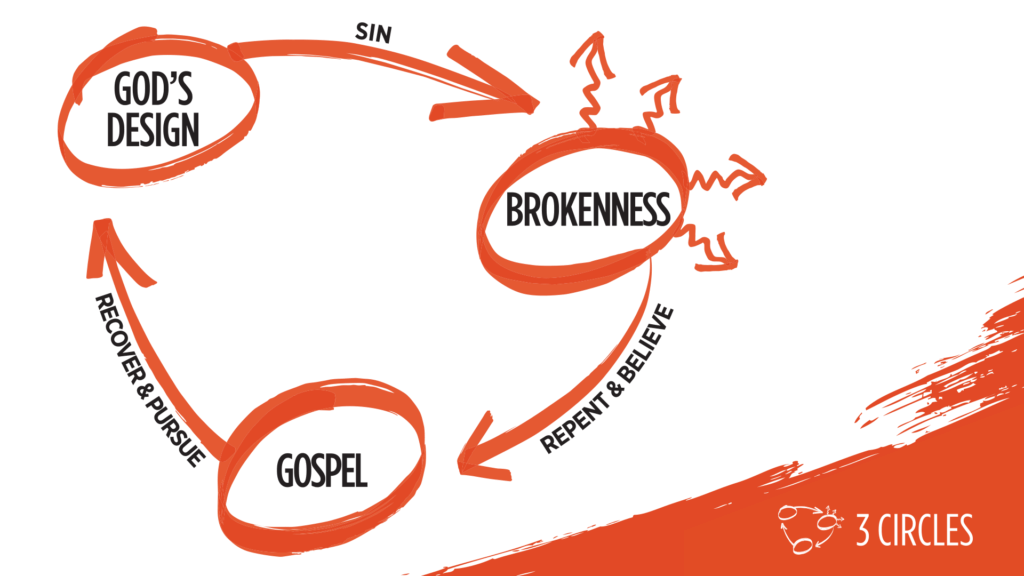
Sometimes, though, even when we know how we are being changed, we hesitate or aren’t sure how to share that with others. We know Jesus has told us to tell others about the good news of God’s grace, but don’t want to be pushy or offensive. In fact, this is one of the most common questions we’re asked: I know I’m supposed to tell others about Jesus, but I don’t know what to say. To that end, we are going to spend time in September talking about a model for sharing your faith called “The Three Circles.” This is a slightly different model than others you might already know. The emphasis with The Three Circles is helping you learn how to turn everyday conversations into Gospel conversations. We’ll introduce the Three Circles in a three week sermon series, which will be followed by a six week Sunday School class.
If we want to see Northminster grow, it simply comes down to telling others about Jesus and inviting them to church to learn more about Him. The elders and I encourage everyone to join us for worship and plan to participate in the Sunday School class. We’re excited about how the Lord will use the Three Circles to help us share the good news of the Gospel of Jesus Christ with our friends, our family, and the community around us. Find more information about the Three Circles Sunday School class on page seven of the newsletter, or by clicking here..
How then will they call on him in whom they have not believed? And how are they to believe in him of whom they have never heard? And how are they to hear without someone preaching? And how are they to preach unless they are sent? As it is written, “How beautiful are the feet of those who preach the good news!” — Romans 10:14-15
Blessings,
Rev. David Garrison

I’m not lost
I’m just looking for what I haven’t found
there’s an ache inside of me that’s reaching out
for something deeper than anything I’m seeing
like a traveler I’m following
the echo of Eden.
— Green River Ordinance, “Echo of Eden” (video below)
Many years ago my grandfather and I boarded a plane to a place I’d never before been. When I stepped off the walkway into Ted Stevens International Airport in Anchorage, Alaska, the very first thought that crossed my mind was, “I’m home,” which was strange because airports aren’t the homeliest of places and, again, I’d never been there before. It would be another decade before I was actually able to call Anchorage “home,” and that only lasted for two years.
For most of my life, “home” for me meant Rockville, Maryland. It’s where I grew up and where my parents lived for 40 years. I left Rockville in 1997 and my parents moved to North Carolina a few years ago. But even before my parents moved away, Rockville stopped being home. I would go back to visit, but it wasn’t a place I referred to as “home” any longer. Even though I call places in Orlando, Anchorage, St. Louis, Hendersonville and now Madison Heights “home,” the longing for home points to something deeper.
A few months ago I was with a group of friends and family, and we had the most heartwarming and delightful time together. It was an evening of silliness and joy, one of those moments in time that you wish would last forever, but of course never do. Those moments touch a longing in our soul to be in the company of others, a longing that is at times met in our relationship with our spouse, our children, life-long close friends, maybe extended family. But as good as those relationships are, they aren’t perfect and often bring as much pain as they do joy. We weren’t meant to be alone, God says in Genesis 2, but relationships are hard. Sometimes too hard. We long for deep, meaningful relationships with others, but because it’s often so hard and painful, we settle for something much less, like the shallow façade of social media.
It seems as if our lives are becoming ever more frenetic and chaotic; we feel stretched in a dozen different directions at once. We frantically try to keep all of the plates spinning, while they begin to slow and wobble precariously. The more we stretch, the harder we press, the more the cracks begin to show. 2 Corinthians 4:7 describes us as cracked “jars of clay,” through which the grace of God shines… but if there are more cracks than clay, can it still be called a jar? As Chuck DeGroat writes, “We all think we know the solution — more downtime, more relaxation, more rest. And we’re all wrong.” What we truly long for is wholeheartedness.
All of this points to a persistent gnawing discontent in our souls, a longing that we try to satisfy in a thousand different ways but is always unsatisfied. We know there’s something missing, but we often aren’t sure what. Augustine once said, “our hearts are restless until they find their rest in You.” The most foundational longing of the human heart is for God. If earth has no sorrows heaven can’t heal, then neither does earth have any means of satisfying a longing that yearns for something beyond this world.
CS Lewis once wrote, “If I find in myself a desire which no experience in this world can satisfy, the most probable explanation is that I was made for another world.” Our longing for home, for relationship, for wholeheartedness, for God can never be satisfied by anything in this world, because they are longings that have existed long before this world. They are longings for “the way things used to be” in the truest, oldest sense of that phrase. They are echoes of Eden, longing for the way things were before The Fall. Eugene Peterson says, “This place, this garden, is not utopia, is not an ideal no-place. It is simply place, locale, geography, geology. But it is also a good place, Eden, because it provides the form by which we can live to the glory of God”
These longings have echoed for millennia, and they are only satisfied in Jesus Christ. Through our salvation in Christ, we are able to experience a partial satisfaction of those longings, but their ultimate satisfaction comes in the consummation of the Kingdom of God when Christ returns. Our August sermon series looks at the “echoes of Eden,” these deep longings of the human heart. We’ll see how they are born out of the goodness of God’s creation, how Christ has redeemed them, and how they will ultimately be satisfied in the New Heavens and New Earth when Jesus consummates His kingdom at the end of time. Be sure to join us for worship in person or online during August.
And not only the creation, but we ourselves, who have the firstfruits of the Spirit, groan inwardly as we wait eagerly for adoption as sons, the redemption of our bodies. For in this hope we were saved. Now hope that is seen is not hope. For who hopes for what he sees? But if we hope for what we do not see, we wait for it with patience. — Romans 8:23-25
Blessings,