106 Clearview Rd, Madison Heights VA, 24572
Northminster Church © 2017
Find us on


And Mary said, “My soul magnifies the Lord,
and my spirit rejoices in God my Savior,
for he has looked on the humble estate of his servant.” — Luke 1:46-48
There’s a tension lurking underneath the surface of our celebrations of Christmas each year. It’s one of those things that can be easy to overlook, but once you see it, it’s really hard to unsee it. In the birth of our Savior, Jesus Christ, we celebrate the fulfillment of all of the prophecies in the Bible that speak to the redemption of all of humanity and creation. Over the course of this month, we will sing of joy, while many are filled with sorrow and struggle with depression. We sing of peace, while wars rage around the world and in our hearts. We sing of love, and yet are surrounded by so much hate. We sing of hope, but wonder, deep down, if anything will ever change. Wasn’t Jesus supposed to change all of this?
Consider Mary’s song of joy of what God has already done in The Magnificat: “He has shown strength with his arm; he has scattered the proud in the thoughts of their hearts; he has brought down the mighty from their thrones and exalted those of humble estate; he has filled the hungry with good things, and the rich he has sent away empty.” (Luke 1:51-53) I look around the world today, and I see a lot of proud and mighty people still boasting. I see those of humble estate still struggling. The hungry are still starving; the rich are still hoarding. We know Jesus accomplished these things, because the Bible is very clear that He did, but why is there still so much suffering and injustice, sin and brokenness? It is the season of Advent that helps provide an answer.
In her magnificent book, Advent: The Once & Future Coming of Jesus Christ, Fleming Rutledge writes,
Karl Barth exclaimed, “What other time or season can or will the Church ever have but that of Advent!” This illuminates the present dimension of the season. It locates us correctly with relation to the first and second comings of Christ. Advent calls for a life lived on the edge, so to speak, all the time, shaped by the cross not only on Good Friday but wherever and whenever we are, proclaiming his death to be the turn of the ages “until he comes” (I Cor. 11:26)… In a very real sense, the Christian community lives in Advent all the time. It can well be called the Time Between, because the people of God live in the time between the first coming of Christ, incognito in the stable in Bethlehem, and his second coming, in glory, to judge the living and the dead. In the Time Between, “our lives are hidden with Christ in God; when Christ who is our life appears, then we also will appear with him in glory” (Col. 3:3–4). Advent contains within itself the crucial balance of the now and the not-yet that our faith requires. (Pg 7)
Everything the Bible says about what Jesus accomplished in His incarnation is absolutely true. God is now with us in Jesus Christ. The power of sin and death has been broken. The proud have been brought down and the humble lifted up. Prisoners freed. The blind given sight. The lost found. The broken soul made whole. And yet. And yet, all of these things are also yet to be completed. As Jesus said, “The time is fulfilled, and the kingdom of God is at hand; repent and believe in the gospel.” (Mark 1:15) Jesus has absolutely accomplished all of these things, but He has not yet completed all of these things. Advent is the season that reminds us of this tension and invites us into it. It is the season of, as Rutledge said, “the Time Between.”
When Jesus returns, the Kingdom of God will finally be consummated. The work begun with His first coming will be completed. That which has happened now in part will then be completed in full. It is the season of Advent that keeps our focus and our hope on that great and wonderful day. Advent doesn’t merely acknowledge the tension of the already/not yet, it embraces it. Just as in the incarnation our Savior came to earth and met us where we are, the season of Advent reminds us that He is still doing the same today, and that one day He will finish what He started.
This Advent, we’ll take a look at how each of the Gospels tell the story of the birth of our Savior (except for Mark, who doesn’t include a birth narrative), and how each points us to His return. We’ll begin our Advent celebration with a service of prayer, scripture and song, using Mary’s Magnificat as our guide to prepare our hearts and our souls to worship deeply and well this holiday season. As you prepare for and celebrate the birth of our Savior, keep your eyes focused on His return. Joy to the world, the King is coming!
For we know in part and we prophesy in part, but when the perfect comes, the partial will pass away. When I was a child, I spoke like a child, I thought like a child, I reasoned like a child. When I became a man, I gave up childish ways. For now we see in a mirror dimly, but then face to face. Now I know in part; then I shall know fully, even as I have been fully known. (1 Cor. 13:9-12)
Blessings,
Rev. David Garrison
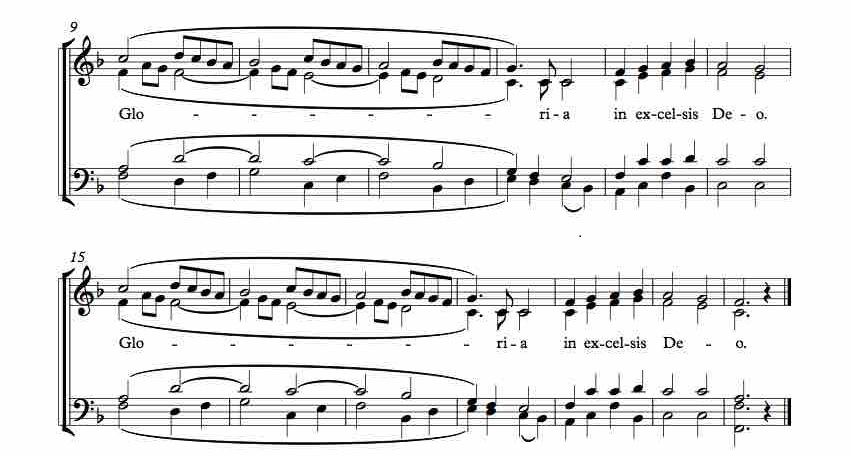
For as long as I can remember, I have loved the music of the Christmas season. From Linus and Lucy Can Rock to You’re a Mean One, Mr. Grinch and from Frosty the Snowman to Rudolph, the Red-Nosed Reindeer, music from the animated specials of my childhood still brings a smile to my face.
Through the years, I have added an appreciation of more substantial works, including Antonio Vivaldi’s Gloria and George Friedrich Handel’s Messiah. Although they were written about 300 years ago, both are still widely performed when Christmas time is here, eloquent evidence of music’s ability to convey profound truths to human souls.
And I never tire of playing or singing Christmas carols. My favorite is Angels We Have Heard on High. The melody comes from a traditional French piece, “The Angels in Our Countryside.” “Traditional” is one way musicians say, “We have no idea who wrote this tune.”
The author of the 10 original verses is equally unknown. We do know that in 1860, these verses were translated into English by James Chadwick, a Roman Catholic bishop from England. I was surprised when I learned that it was not until 1966, when the American composer Austin Lovelace was preparing to include it in a new United Methodist hymnal, that this centuries-old carol was first given the title “Angels We Have Heard on High.”
One of my earliest musical memories is learning to sing this carol for my home church’s Christmas pageant. This annual event was the standard small church bathrobe drama, complete with shepherds and angels, wise men and a plastic baby Jesus. But with each tableau, the Junior Choir sang a verse or two from an appropriate carol. When we got to Angels We Have Heard on High, I was asked to sing the alto line for the refrain.
That was a revelation.
As the carol’s refrain began, the sopranos held their note for several beats while the altos sang shorter notes below them. Then we held a long tone while the sopranos kept changing notes above us. I was hooked. It would be years before I learned that the technical term for that musical procedure is “polyphony,” literally, “many voices.” It took me even longer to recognize that this compositional technique provides an ideal way to set the text of the carol’s refrain, which is taken from Luke 2:13-14:
And suddenly there was with the angel a multitude of the heavenly host praising God and saying,
“Glory to God in the highest,
and on earth peace among those with whom he is pleased!”
By definition, a multitude of angels would include many voices. Using what a former pastor called my “sanctified imagination,” I can imagine that the voices of the heavenly host ranged from low to high, each with its own distinctive timbre. And while I can’t imagine what that heavenly choir sounded like when they praised God from the sky, I’m sure that what the shepherds heard was glorious and that it glorified God in the highest.
As together we begin this new Christian year, journeying through Advent to Christmas with the music of the season ringing in our years, let me encourage you to listen a bit more carefully to the carols you’ll hear and sing. For even though we know them all by heart, if we pay a little more attention to both the words and the music, we just may find our souls refreshed in unexpected ways.
Gloria in excelsis Deo.
On Sunday, November 2, Northminster will add an extra element to our usual order of worship – a necrology. Names of church members who have died in the past 12 months will be read aloud and followed by a single chime. It’s a simple but meaningful ritual, a practice that reminds us of two important truths about our faith. But first, a bit of history.
In the Roman Catholic Church, All Saints Day is annually celebrated on November 1st, while All Souls Day is November 2nd. In many Protestant denominations, the first Sunday in November unites these celebrations on what we call All Saints Sunday.
While there are understandable differences between Catholic and Protestant traditions, a central theme in each is celebrating the transition of believers from the Church Militant to the Church Triumphant, that is, recognizing and rejoicing with all those Christians who have finished their work on earth and now abide with God in heaven.
The first truth this celebration brings to our attention is that all Christians are saints. Both the Hebrew (OT) and Greek (NT) words translated “saint” come from a root that means “holy.” To be holy is to be set apart by God in order to serve God. Paul describes saints as “those sanctified in Christ Jesus, called to be saints together with all those who in every place call upon the name of our Lord Jesus Christ, both their Lord and ours” (1 Cor. 1:2).
Here Paul shows us that sainthood, which is also called sanctification, (being made holy), is both a position and a process. As God’s chosen people, we have been made holy through the work of Jesus Christ on the cross. We are being made holy through our cooperation with the work of the Holy Spirit in and through us. And one day we will be made holy as we reunite with the saints who reached heaven before us.
As in our worship on All Saints Sunday we remember the saints of this congregation who now worship God in heaven, we are also reminded of a second truth – that our Christian faith is built on a firm historical foundation.
I affirm the observation made by church historian Bruce Shelley, who writes: “Many Christians today suffer from historical amnesia. The time between the apostles and their own day is one giant blank. That is hardly what God had in mind.”[1]
I suspect not many of us could cite chapter and verse of the history of Northminster Evangelical Presbyterian Church. I’m quite sure vast numbers of Presbyterians have little knowledge about the ecclesiastical developments that followed Martin Luther’s 95 Theses. Even more know less about the first 1,500 years of Christian history and theology. Such knowledge gaps impede our growth as individual Christians and as a congregation. For if we don’t know how we got to where we are, where we go next is anybody’s guess.
This All Saints Sunday, let’s rejoice with the souls we have known who now rest from their labors. And in the year between this celebration and the next, let’s spend some time looking back so that we might more clearly see the way ahead.

“Hear this word, you cows of Bashan,
who are on the mountain of Samaria,
who oppress the poor, who crush the needy,
who say to your husbands, ‘Bring, that we may drink!’” — Amos 4:1
This morning I read an article in The Atlantic, “The Innovation That’s Killing Restaurant Culture.” From the article: “In 2024, nearly three out of every four restaurant orders were not eaten in a restaurant, according to data provided to me by the National Restaurant Association, a trade group. The share of customers using delivery specifically, as opposed to picking up takeout or going to a drive-through, more than doubled from 2019 to 2024. In a recently released poll by the association, 41 percent of respondents said that delivery was ‘an essential part of their lifestyle.’”
It’s difficult to understate the impact this is having on the restaurant industry. Restaurants are adapting their menus to be more cost effective and provide food that travels better. Kitchens are getting bigger, seating areas smaller. Some new restaurants aren’t designed for in-person dining at all. Ellie Cushing writes, “In effect, delivery has reversed the flow of eaters to food, and remade a shared experience into a much more individual one. If communities used to clench like a fist around their restaurants, now they look more like an open palm, fingers stretched out as far as possible, or at least to the edge of the delivery radius.”
It’s too easy to blame this shift on the pandemic, although the pandemic certainly accelerated it, as it did many other things. Like so much else, these shifts started long before a virus shut us all up inside our homes. The seismic shift happened back in the early 2000s with the dual supernovas of the development of the internet and smartphones. Twenty or so years later, every facet of our lives has radically changed. Winston Churchill once said, “We shape our buildings and afterward our buildings shape us.” We now have the ability to sit at home and have the world brought to us on a whim, but at what cost? How is that convenience shaping us?
The “cows of Bashan” were the ancient equivalent of Wagyu beef today. They were meticulously doted over and cared for so as to provide the absolute highest quality meat possible. When Amos calls the Israelites the cows of Bashan, he is saying they are lazy, fat, and indolent. As Michael McKelvey writes, Amos is painting a picture of a people who “defiantly and selfishly take advantage of others, using them for their own ends. Their concern is not for what is morally right or socially acceptable. Instead, they live unto themselves; their god is their belly.” Feeding their desires and appetites by any means necessary, they cared not at all about the consequences of their self indulgence. One might argue whether we are more or less self-indulgent than the ancient Israelites, but one thing is true: we have not counted the cost we are paying for our cultural smartphone addiction. It’s been 2,800 years since Amos wrote his prophecy, but it has come true in far more visceral ways than he ever imagined.
What makes dining at a restaurant special isn’t simply that someone else is cooking for you. It’s the entire experience. It’s the sensory experience of the aromas and the ambiance, but more than that it’s the relational experience — from the welcome extended by the host, to the courtesy of the waitress, to the attention given to your meal by the chef, to the shared fellowship of those with whom you dine. None of that can be put in a box and delivered to your door. What is lost without those experiences goes far beyond the scope of these words. This barely scratches the surface; we haven’t talked about the impact on families, jobs, the economy, and much more.
However, Amos wasn’t talking about having food delivered to your door, and neither are we. Have we taken the time to consider what we are losing by doordashing our worship, our discipleship, or our fellowship? We worship by turning on the radio or Spotify. We get our discipleship from TikTok. We find fellowship through social media. All from the comfort of our couches. But true faith is inescapably relational and experiential. True worship happens when we are gathered together with the saints (Hebrews 10:25). Discipleship occurs when “iron sharpens iron” (Prov. 27:17). Fellowship, which at its root means “connection,” requires being physically present with one another (Acts 2:42). Modern technology is reshaping everything, but it can’t change the fundamental paths of our faith.
There’s nothing necessarily wrong with doordashing your dinner when you need to, or using Spotify or TikTok. But be aware of what you are choosing when you do so, and what you are not choosing as well. Be intentional in being wise and discerning when it comes to your worship, discipleship and fellowship. Make the effort to pursue Jesus in the company of other brothers and sisters. In person. Much like dining out, our faith was never meant to be an individual experience, but a communal one.
Finally, brothers and sisters, whatever is true, whatever is honorable, whatever is just, whatever is pure, whatever is lovely, whatever is commendable, if there is any excellence, if there is anything worthy of praise, think about these things. What you have learned and received and heard and seen in me—practice these things, and the God of peace will be with you. — Philippians 4:8-9
Blessings,
Rev. David Garrison

When Joshua was by Jericho, he lifted up his eyes and looked, and behold, a man was standing before him with his drawn sword in his hand. And Joshua went to him and said to him, “Are you for us, or for our adversaries?” And he said, “No; but I am the commander of the army of the LORD. Now I have come.” — Joshua 5:13-14
It has been a trying month, at the end of a trying summer. Two politically-motivated assassinations, multiple attacks on churches, several shootings at schools and workplaces, and an awful lot of finger pointing has us all in a state of constant anxiety and tension. It seems as if every word spoken, every statement made on social media, every speech (or sermon) given is parsed to try and determine who is with us and who is against us. We know (well, presume actually) that God is on our side and want to know whether the people we read or talk to are our friends or our enemies. Perhaps God doesn’t pick sides the same way we do.
The verses above come in the middle of a very tense moment for Joshua and the people of Israel. Moses has died and Joshua was appointed to take his place. Chapter 1 of the book of Joshua recounts God’s commissioning of Joshua (God tells Joshua to “be strong and courageous” no less than three times in the first nine verses) and how he took command of the people. Chapter 2 is the famous story of Rahab and the spies in Jericho. In chapters 3 and 4, Israel crosses into the Promised Land through the River Jordan, in a scene reminiscent of the crossing of the Red Sea during the Exodus. At the beginning of chapter 5, as they prepare to begin the conquest of the Promised Land, the people of God are re-consecrated to the Lord. Just after the verses above, in chapter 6 we have the fall of Jericho. Squeezed in at the end of chapter 5 we have this very short scene with Joshua and and angel, the Commander of the Army of the Lord.
Joshua, pacing in the desert with anxiety and worry about what lies ahead (the impenetrable and impassable walls of Jericho), comes across a stranger with a sword. It’s a perfectly reasonable question to ask: “Are you friend or foe? Are you for us or our adversaries?” What stands out most about this is how the angel answers Joshua’s question. Of course the answer is, “I am for you.” Everything up to this point has shown just how thoroughly God is “for them.” They are the people of Israel, God’s chosen ones. God, himself, commissioned Joshua and directed his steps to this point. God, himself, stopped the waters of Jericho so the people could cross. God, himself, directed their re-consecration to Him. But the answer wasn’t, “I am for you.” The answer is as blunt as it is curt: “No.”
God is only ever on one side: His own. This is made most clear in Isaiah 48:9-11: “For my name’s sake I defer my anger; for the sake of my praise I restrain it for you, that I may not cut you off. Behold, I have refined you, but not as silver; I have tried you in the furnace of affliction. For my own sake, for my own sake, I do it, for how should my name be profaned? My glory I will not give to another.” (Is. 48:9-11) What God does, or does not, is based solely on what furthers His plans and increases His own glory. We get so wrapped up in presuming that God is on our side that we rarely stop to ask whether we are on His.
Almost a thousand years later, the disciples wanted to know the same thing Joshua did. After three years of following Jesus, facing the depths of despair as He was crucified and died, and then the heights of exaltation when He rose from the grave, they still thought He was on their side. Just before Jesus ascended to heaven, they asked, “Lord, will you at this time restore the kingdom to Israel?” He said to them, “It is not for you to know times or seasons that the Father has fixed by his own authority. But you will receive power when the Holy Spirit has come upon you, and you will be my witnesses in Jerusalem and in all Judea and Samaria, and to the end of the earth.” (Acts 1:6-8) Once again, Jesus doesn’t give the expected answer. Jesus basically says, “You’re asking the wrong question. But I’m going to empower and enable you to be on my side, to be my hands and feet, to carry the good news of the coming of God’s Kingdom to all corners of your neighborhoods and the globe.”
It took a long time for Israel to take possession of the Promised Land. At the end of the book of Joshua, he gathers all the people together. He reminds them of all that God has done for them from the time they left Egypt up to that moment because they were on God’s side. Joshua then issues a challenge, one that echoes through to our day. Fear the Lord, Joshua says, and put away the petty “gods” and divisions that this world tells you matter. Choose for yourself whose side you will be on: God’s, or not God’s. With Joshua I declare, as for me and my house, we will serve the Lord. What say you?
Now therefore fear the LORD and serve him in sincerity and in faithfulness. Put away the gods that your fathers served beyond the River and in Egypt, and serve the LORD. And if it is evil in your eyes to serve the LORD, choose this day whom you will serve, whether the gods your fathers served in the region beyond the River, or the gods of the Amorites in whose land you dwell. But as for me and my house, we will serve the LORD. — Joshua 24:14-15
Blessings,
Rev. David Garrison
And he said to them, “The harvest is plentiful, but the laborers are few. Therefore pray earnestly to the Lord of the harvest to send out laborers into his harvest. Go your way; behold, I am sending you out as lambs in the midst of wolves.” — Luke 10:2-3
Last fall we had a couple of town hall meetings to discuss the state and future of our church. To recap: like many churches, we have seen a significant decline in worship attendance and engagement in the life of our church. While for the most part our income has remained steady, it is also declining. Up until last fall, we had seen very few visitors to our church, and those who did visit usually did not return. It seemed as if, while we love our church and what we offer, it wasn’t resonating or connecting with others in our community. Our circumstances seemed discouraging, to say the least. One year later, we’ve often been asked about where things stand and if we are as concerned as we were.
When you look at the practical numbers — worship attendance and income — not much has changed. Our average worship attendance is about the same as it was last fall, and our income is just slightly lower. But those numbers only tell one part of the story, and not the most important part. Since last fall we have had a steady increase in visitors to our church, which led to our largest Inquirer’s Class in the past 8 years. One new regular attender commented, “I didn’t know churches like yours existed any more.” Where we often wonder if our church is declining into irrelevance, another visitor sees a community that has deep faith and deep relationships, the very things she has been needing and looking for.
Where did these new visitors come from? In almost every case, the answer is the same: Someone invited me. In fact, when you boil every church growth and evangelism strategy down to its core, it’s always about some form of personal invitation. It’s how the Gospel spread in the very beginning, and it’s how the Church has grown ever since. Telling others about Jesus is something that all believers are called and invited to do. As Jesus and the Holy Spirit change and transform us, we are invited to share that transformation with others.
The most important part of our life of faith is for us to be looking to see how we are growing as disciples of Jesus Christ, paying attention to how the Holy Spirit is making us into new creations, formed in the image of our Savior: “Therefore, if anyone is in Christ, he is a new creation. The old has passed away; behold, the new has come.” (2 Corinthians 5:17) Think about it this way: when something good happens in our lives or when we have good news to share, we naturally and instinctively want to share that with the people around us. When we see how Jesus has changed us, we want to share that change with others. This change is a process that happens throughout our lives on this side of Glory. Look for how the Holy Spirit has changed you and how you are growing as a disciple. If you aren’t sure how that change is happening in your life, consider asking what the Holy Spirit might be inviting you to change or do differently so you can experience the change He wants to bring about in you.
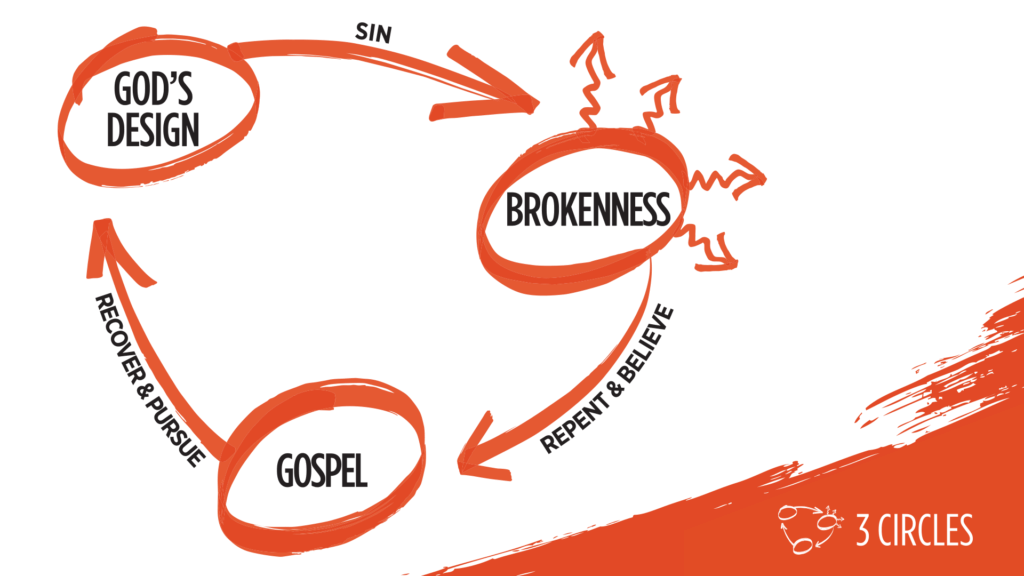
Sometimes, though, even when we know how we are being changed, we hesitate or aren’t sure how to share that with others. We know Jesus has told us to tell others about the good news of God’s grace, but don’t want to be pushy or offensive. In fact, this is one of the most common questions we’re asked: I know I’m supposed to tell others about Jesus, but I don’t know what to say. To that end, we are going to spend time in September talking about a model for sharing your faith called “The Three Circles.” This is a slightly different model than others you might already know. The emphasis with The Three Circles is helping you learn how to turn everyday conversations into Gospel conversations. We’ll introduce the Three Circles in a three week sermon series, which will be followed by a six week Sunday School class.
If we want to see Northminster grow, it simply comes down to telling others about Jesus and inviting them to church to learn more about Him. The elders and I encourage everyone to join us for worship and plan to participate in the Sunday School class. We’re excited about how the Lord will use the Three Circles to help us share the good news of the Gospel of Jesus Christ with our friends, our family, and the community around us. Find more information about the Three Circles Sunday School class on page seven of the newsletter, or by clicking here..
How then will they call on him in whom they have not believed? And how are they to believe in him of whom they have never heard? And how are they to hear without someone preaching? And how are they to preach unless they are sent? As it is written, “How beautiful are the feet of those who preach the good news!” — Romans 10:14-15
Blessings,
Rev. David Garrison
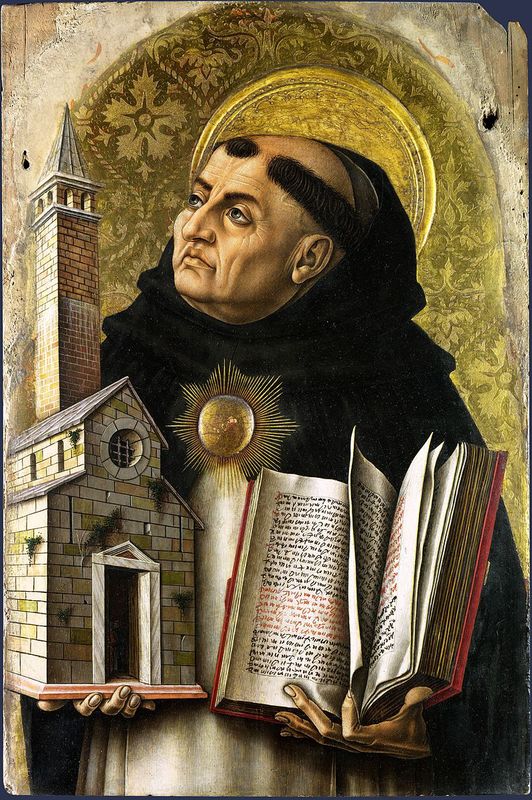
On January 28, the Roman Catholic Church annually observes the Feast of Saint Thomas Aquinas. This year, that festival celebrated the 800th anniversary of his birth.
I use that admittedly awkward phrasing because no one knows his actual birthday. From existing records, we can tell he was born either in late 1224 or early 1225. However, 13th-century Italian officials in the city of Aquino weren’t terribly fastidious about the exact dates children were born to minor noblemen. Nonetheless, the providential timing of his birth helped Aquinas become one of the most important theologians in the Christian Church and one of humanity’s most influential philosophers.
Aquinas lived and worked at a hinge point in Western culture. Europe was on the cusp of the Renaissance. Just 25 years before Aquinas’ birth, the University of Paris received its royal charter. Paris was the first university in the sense that we now use that term: an institution that teaches a variety of disciplines to both undergraduate and graduate students. And with the rise of educational institutions not run by the Roman Catholic Church, the relationship between Christian faith and human reason was undergoing its first major reevaluation in nearly a millennia. Aquinas would play a key role in that project.
As a monk in the recently formed Dominican order, Aquinas spent most of his ministry as a teacher, including at the University of Paris. A great deal of his work, in the classroom and his writings, intended to show the Church and the world that the truths of human reason, those demonstrable by the observations of the senses and the exercise of logic, are compatible with the truths of revelation, those that have been divinely disclosed by God to his human creation.
Today, Aquinas is also recognized as the culminating figure of Scholasticism. The primary aim of the late-medieval Scholastics, who were both philosophers and theologians, was to correlate Christian doctrine with human reason. The Scholastics wanted to show the reasonableness of God’s teachings. They also wanted to explain why those doctrines were important to the daily life of every Christian regardless of occupation or level of education. The Scholastics recognized Christian religion and contemporary science aren’t enemies. Rather, they saw them as complementary ways of learning about God and his world.
And yet, from the Renaissance through the Enlightenment and the Modern era, powerful forces have been trying to separate religious faith from human reason. Those forces are now waning and their centuries-old project is in peril. Most notably, the farther back in time scientists are able to see, the more their observations begin to sound like Aquinas’ articulations of his arguments for the existence and nature of God.
In his 1978 book God and the Astronomers, Robert Jastrow, founder of NASA’s Goddard Institute and an atheist, explained:
For the scientist who has lived by his faith in the power of reason, the story ends like a bad dream. He has scaled the mountains of ignorance; he is about to conquer the highest peak; as he pulls himself over the final rock, he is greeted by a band of theologians who have been sitting there for centuries.
Aquinas, I suspect, has a seat on the front row. Christians from all traditions, along with those who share his concerns if not our faith, can continue to learn from his work and celebrate his life – even if we’re not quite sure about his birthday.
This year the Nicene Creed celebrates its 1,700th birthday. Accommodating that many candles would require a birthday cake far larger than any I’ve ever seen. And if you’re wondering about this article’s title, you may want to rewatch Jaws, which turns 50 this year. (Anybody else feeling old?)
The Nicene Creed seems less well known to Presbyterians and other Reformed Christians than either the Apostles’ Creed or the Westminster Confession of Faith. For reasons I won’t explore here, I don’t find that surprising. But I do believe that as the Church enters its third millennium, all Christians would be well served by learning more about the background and importance of this creed as it reaches the ripe old age of 1,700.
In the year 325, the Church was still adjusting to its new status in the Roman Empire. Barely a decade earlier, the new Roman Emperor, Constantine, had converted to Christianity and issued his Edict of Toleration, which legalized the faith in the empire. The Edict would prove a mixed blessing. Official persecution of Christians ended and Church membership grew rapidly. Unfortunately, with growth came controversy.
As early as 318, a pastor named Arius began teaching that Jesus was not fully God; that Jesus was not eternal, but instead was the first creature made by God. This new doctrine contradicted Scripture and three centuries of Church teaching. To resolve the conflict in the Church, and not coincidentally to help keep peace in his empire, Constantine called for a council of church leaders to meet in city of Nicaea in 325.
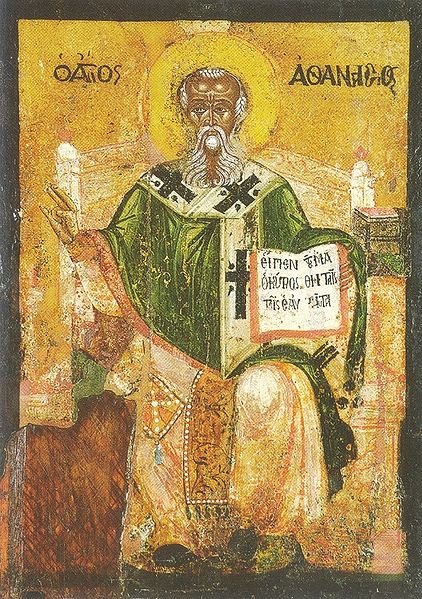
There, Arius was given the opportunity to explain his beliefs to the bishops. He and his supporters were sure his views would prevail. However, his novel teaching, summarized by the slogan “There was when the Son was not,” was opposed by one of the most able and influential theologians of the Early Church, Athanasius. Athanasius insisted that if Jesus wasn’t fully God, he couldn’t fully accomplish human salvation. “That which has not been assumed has not been healed,” was his succinct response.
Rejecting as heretical Arius’ insistence that Jesus was not God, the Council of Nicaea produced the Nicene Creed, which declared that Jesus is “of one substance” (homoousia) with the Father. Homoousia combines homo, meaning same, with ousia, meaning substance, or essence. The Greek word isn’t found in the Bible, which troubled some members of the council. But as the Church worked to articulate the Bible’s unchanging revelation in the language of its day, homoousia seemed the best word to express the eternal relationship between God the Father and God the Son.
The importance of the Nicene Creed in Christian history is summarized by the late Presbyterian theologian John Leith who writes, “The first Christian doctrine that the church settled in an ecumenical council and that has subsequently received approval in the life of the church through the centuries had to do with the deity of Jesus Christ. The church made clear at Nicaea what it was convinced had always been the faith of Christian people. In Jesus Christ human beings are confronted by God.”
For nearly two millennia, the Nicene Creed has remained the most widely quoted creed in Christendom. It’s accepted by Roman Catholics, Eastern Orthodox, Anglicans, and most Protestant denominations. Each time we recite this historic affirmation of our faith, we remind ourselves of a fundamental Christian truth: God’s nature is Triune. We also remind ourselves of our unbreakable connection to Christians around the world and throughout time.
So, on the 1,700th birthday of the Nicene Creed, a cake may be in order. Especially if we fudge the candles.

I’m not lost
I’m just looking for what I haven’t found
there’s an ache inside of me that’s reaching out
for something deeper than anything I’m seeing
like a traveler I’m following
the echo of Eden.
— Green River Ordinance, “Echo of Eden” (video below)
Many years ago my grandfather and I boarded a plane to a place I’d never before been. When I stepped off the walkway into Ted Stevens International Airport in Anchorage, Alaska, the very first thought that crossed my mind was, “I’m home,” which was strange because airports aren’t the homeliest of places and, again, I’d never been there before. It would be another decade before I was actually able to call Anchorage “home,” and that only lasted for two years.
For most of my life, “home” for me meant Rockville, Maryland. It’s where I grew up and where my parents lived for 40 years. I left Rockville in 1997 and my parents moved to North Carolina a few years ago. But even before my parents moved away, Rockville stopped being home. I would go back to visit, but it wasn’t a place I referred to as “home” any longer. Even though I call places in Orlando, Anchorage, St. Louis, Hendersonville and now Madison Heights “home,” the longing for home points to something deeper.
A few months ago I was with a group of friends and family, and we had the most heartwarming and delightful time together. It was an evening of silliness and joy, one of those moments in time that you wish would last forever, but of course never do. Those moments touch a longing in our soul to be in the company of others, a longing that is at times met in our relationship with our spouse, our children, life-long close friends, maybe extended family. But as good as those relationships are, they aren’t perfect and often bring as much pain as they do joy. We weren’t meant to be alone, God says in Genesis 2, but relationships are hard. Sometimes too hard. We long for deep, meaningful relationships with others, but because it’s often so hard and painful, we settle for something much less, like the shallow façade of social media.
It seems as if our lives are becoming ever more frenetic and chaotic; we feel stretched in a dozen different directions at once. We frantically try to keep all of the plates spinning, while they begin to slow and wobble precariously. The more we stretch, the harder we press, the more the cracks begin to show. 2 Corinthians 4:7 describes us as cracked “jars of clay,” through which the grace of God shines… but if there are more cracks than clay, can it still be called a jar? As Chuck DeGroat writes, “We all think we know the solution — more downtime, more relaxation, more rest. And we’re all wrong.” What we truly long for is wholeheartedness.
All of this points to a persistent gnawing discontent in our souls, a longing that we try to satisfy in a thousand different ways but is always unsatisfied. We know there’s something missing, but we often aren’t sure what. Augustine once said, “our hearts are restless until they find their rest in You.” The most foundational longing of the human heart is for God. If earth has no sorrows heaven can’t heal, then neither does earth have any means of satisfying a longing that yearns for something beyond this world.
CS Lewis once wrote, “If I find in myself a desire which no experience in this world can satisfy, the most probable explanation is that I was made for another world.” Our longing for home, for relationship, for wholeheartedness, for God can never be satisfied by anything in this world, because they are longings that have existed long before this world. They are longings for “the way things used to be” in the truest, oldest sense of that phrase. They are echoes of Eden, longing for the way things were before The Fall. Eugene Peterson says, “This place, this garden, is not utopia, is not an ideal no-place. It is simply place, locale, geography, geology. But it is also a good place, Eden, because it provides the form by which we can live to the glory of God”
These longings have echoed for millennia, and they are only satisfied in Jesus Christ. Through our salvation in Christ, we are able to experience a partial satisfaction of those longings, but their ultimate satisfaction comes in the consummation of the Kingdom of God when Christ returns. Our August sermon series looks at the “echoes of Eden,” these deep longings of the human heart. We’ll see how they are born out of the goodness of God’s creation, how Christ has redeemed them, and how they will ultimately be satisfied in the New Heavens and New Earth when Jesus consummates His kingdom at the end of time. Be sure to join us for worship in person or online during August.
And not only the creation, but we ourselves, who have the firstfruits of the Spirit, groan inwardly as we wait eagerly for adoption as sons, the redemption of our bodies. For in this hope we were saved. Now hope that is seen is not hope. For who hopes for what he sees? But if we hope for what we do not see, we wait for it with patience. — Romans 8:23-25
Blessings,

A man should hear a little music, read a little poetry, and see a fine picture every day of his life, in order that worldly cares may not obliterate the sense of the beautiful which God has implanted in the human soul. – Johnann Wolfgang von Goethe
I turned on the TV just as the cardinals were entering the Vatican’s Sistine Chapel. Once the door closed behind them, they would begin the conclave that would elect Pope Leo XIV. As the cardinals came into the chapel, each one paused, put his right hand on the Book of the Gospels, and sealed his oath not to reveal what happened in the conclave.
As they did, they stood facing The Last Judgment, an enormous (45 × 39 feet) fresco by the Renaissance artist Michelangelo. Inspired by Dante’s Divine Comedy, the painting was unveiled on October 31, 1541, exactly 24 years after Martin Luther posted the 95 theses that launched the Protestant Reformation.
Five years before Luther’s bold declaration, Michelangelo completed what is widely understood to be his greatest work, the Sistine Chapel Ceiling. Although he had been commissioned to paint the 12 apostles, Michelangelo instead filled the chapel’s ceiling with scenes from the Old Testament.
These frescoes were the largest, but by no means the only, works of art surrounding the cardinals as they prepared themselves for one of their highest duties. As their solemn, unhurried procession unfolded, the news anchor was joined by a gentleman who had spent several years working at the Vatican. She asked how he reacted the first time he set foot in the Sistine Chapel. After a brief pause, he answered:
“I was stunned by the human capacity for beauty.”
This was not the first time I had heard a commentator talk about the beauty of the setting and the moment. But it may have been the first time I heard anyone use the words, “the human capacity for beauty.” That fine-tuned phrase was a welcome reminder that the God who made us in His image created us not only with the innate ability to recognize and enjoy His infinitely varied gifts of beauty, but also with the indelible awareness that shining through the beauty we can access with our physical senses is the One whose very nature is the basis of all beauty, the Triune God.
Sadly, in recent centuries, the notion that God is Beauty (as well as Goodness and Truth) has been scorned in our culture and, for the most part, ignored in our churches. The consequences have been severe. Once we uncritically accept the unbiblical assertion that beauty is in the eye of the beholder, it is a very short step to saying the same about goodness and truth.
Offering a valuable corrective, John Hugo notes, “In both the tabernacle and the Solomonic temple, artistic design, metal craft, sculpture, architecture, and textile arts were employed with God’s blessing and special inspiration (Exod. 31:3-11; Chron. 28:11-21). These examples show that God has uses for the artistic skills of people and that art works are fit vehicles for serving Him.” (Emphasis added.)
I believe the cardinals in the Sistine Chapel were well served by the works of Michelangelo, Botticelli, and others. I also believe that Protestants are well served by beautiful things like stained glass windows and paraments, banners and flowers, hymn texts, piano, and organ (pace, Calvin). For I believe that as we intentionally employ our God-given gift of appreciating beauty, not only we will be drawn closer to God, but we will open those doors so that others may follow that path as well.